


TLDR:
AI mental health apps provide private, flexible support for managing stress and emotions in daily life. They help users build small habits like reflection and check-ins without replacing therapy. Their growth is driven by rising demand, limited access to care, and digital adoption. Used correctly, they offer early, consistent support alongside professional help.
- Yuna Health – Most advanced AI mental health coach for daily emotional support
- Woebot – CBT chat support
- Wysa – AI guided exercises
- Youper – Mood tracking focus
- Replika – AI companionship chats
- Headspace Ebb – Mindfulness suggestions
- Calm Companion – Relaxation guidance
- MindDoc – Symptom tracking
- Earkick – Mood tracking AI
- Serena – Basic chat support
Stress has become a quiet part of many people’s daily lives. Work pressure keeps rising. Screens stay on longer. Many people feel anxious or emotionally tired but do not say anything. They worry about cost, time, and judgment. As a result, support often comes too late.
This gap has helped most of the best AI mental health apps grow quickly. These tools give people private and flexible support by fitting into daily routines and not requiring any appointments. Many people use them as a first step before therapy. Others use them alongside professional care.
The growth of AI mental health apps also reflects larger changes. Demand for mental health support keeps rising, while access to therapists remains limited.
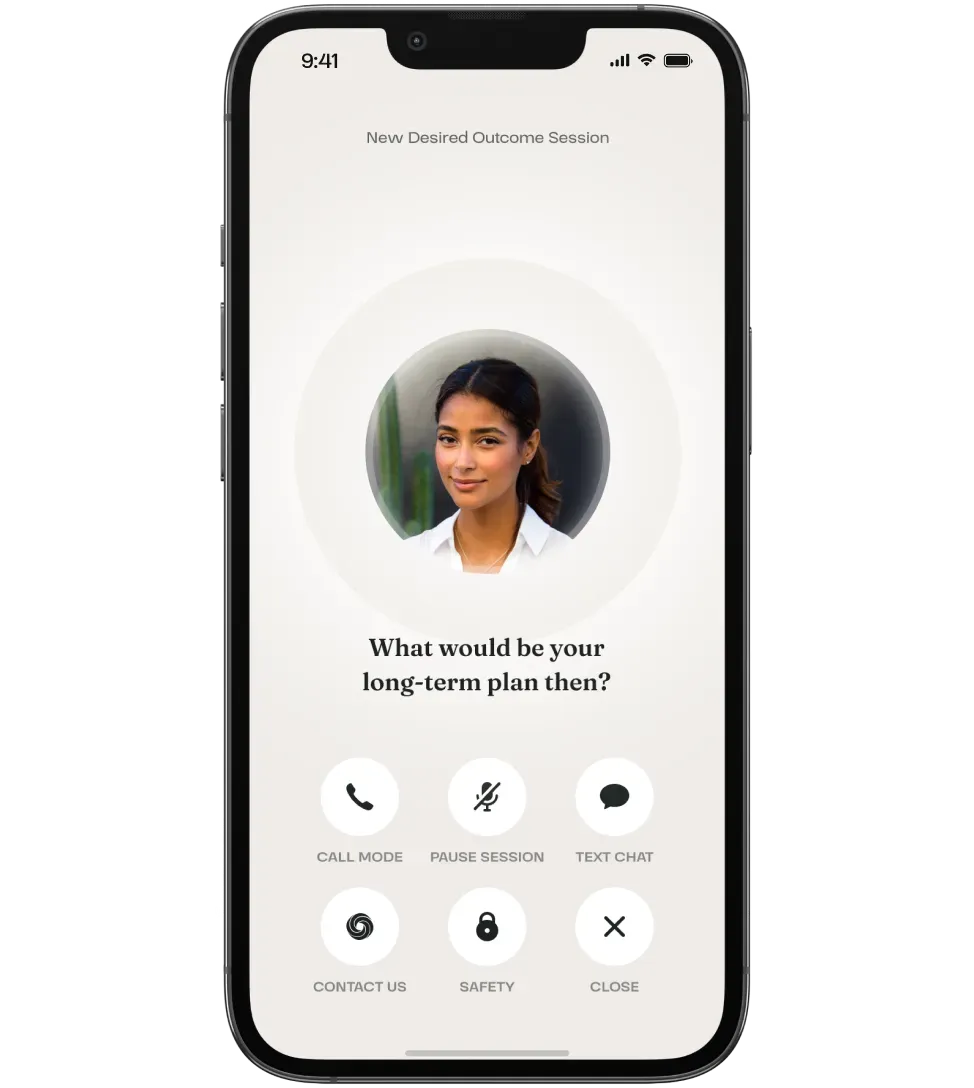
It is important to be clear that AI tools do not replace therapists. They support emotional care in simple ways. Yuna fits this role as it works as an AI mental health coach. It offers daily emotional support through calm conversations, reflection, and grounding.
Experience AI Mental Health Support With Yuna For Free
What Are AI Mental Health Apps?
AI mental health apps are digital tools that support emotional well being using artificial intelligence. Most people access them through mobile apps or web platforms. These tools respond to user input and provide structured emotional support.
Many apps focus on everyday mental health needs. They help people reflect on emotions, support stress management, and offer guided exercises that encourage emotional awareness. Common features include journaling, mood tracking, grounding prompts, and CBT inspired exercises.
Not all mental health apps are the same. Therapy platforms connect users with licensed professionals. Wellness apps focus on meditation or relaxation. AI coaches sit in between by guiding users through emotional habits without claiming to diagnose or treat conditions.
Yuna Health belongs in this mental health coaching category. It focuses on reflection and grounding and supports emotional consistency over time. It also does not present itself as therapy. This distinction helps users set realistic expectations and feel safe using it daily.
Try Yuna — Your AI Mental Health App For Free
What Are the Best AI Mental Health Apps for Therapy?
Many people search for the best AI mental health apps when they want structured emotional support. Yuna is not an AI therapist yet it ranks as the best AI mental health app by acting as a mental health coach:
- Yuna - An AI mental health coach focused on daily emotional reflection, grounding, and private journaling for steady support. It helps users build awareness over time and develop consistent mental health habits without pressure or judgment.
- Woebot - A chatbot based on CBT principles that offers short guided conversations and mood check-ins.
- Wysa - An AI chatbot that uses CBT inspired exercises and offers optional human coaching in paid plans.
- Youper - A mental health app focused on mood tracking and emotional pattern awareness.
- Replika - A conversational AI app designed for companionship rather than structured mental health support.
- Headspace Ebb - An AI feature inside a meditation app that suggests mindfulness activities.
- Calm Companion - A guided feature inside Calm that focuses on relaxation and sleep support.
- MindDoc - An app focused on symptom tracking and emotional monitoring over time.
- Earkick - A free app that tracks mood and stress using text and voice inputs.
- Serena - A chatbot available through messaging platforms that offers basic emotional conversations.
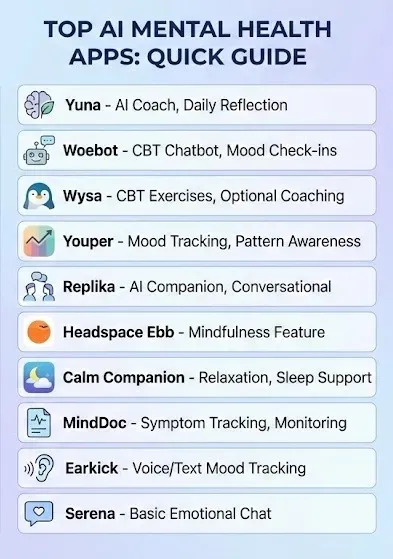
This list shows the range of AI mental health apps available today. Some focus on tracking. Some focus on meditation. Others focus on conversation.
Try AI Mental Health Support With Yuna For Free
What Do the Top AI Mental Health Apps Actually Do?
Many people wonder what the best AI mental health apps truly offer. These tools do not fix problems overnight. Their value comes from steady support and simple structure.
Help People Process Emotions Safely
AI mental health apps create a private space for expression. Users can share thoughts without fear of judgment. Writing or chatting helps people slow down emotional reactions. This process supports awareness and emotional clarity.
Support Daily Emotional Habits
Consistency matters for emotional health. Many apps encourage short daily check-ins. These moments help users reflect and reset. Over time, small habits can reduce emotional overload.
Reduce Isolation and Stigma
Some people hesitate to talk to others about stress or anxiety. AI tools remove this barrier by offering support without social pressure, which reduces mental health stigma. This can make it easier to seek further help later.
Offer Structure Between Therapy Sessions
For people already in therapy, AI tools provide support between sessions. They help track patterns and practice skills learned with a therapist. It is important to note that they do not replace professional care but complement it.
Try Yuna For Free
Why AI Mental Health Apps Matter Right Now
The rise of AI mental health apps reflects real needs that traditional systems struggle to meet.
- Mental health professional shortages limit access to timely care
- Demand for private and flexible support keeps increasing
- Therapy costs remain high for many people
- Comfort with digital tools continues to grow
These factors make mental health AI tools more relevant right now. They offer early support and help people manage stress before it becomes severe. When used responsibly, mental health AI tools support emotional balance without replacing human care.
Experience AI Mental Health Support With Yuna For Free
AI Mental Health Apps Market Size 2025 and Growth Outlook
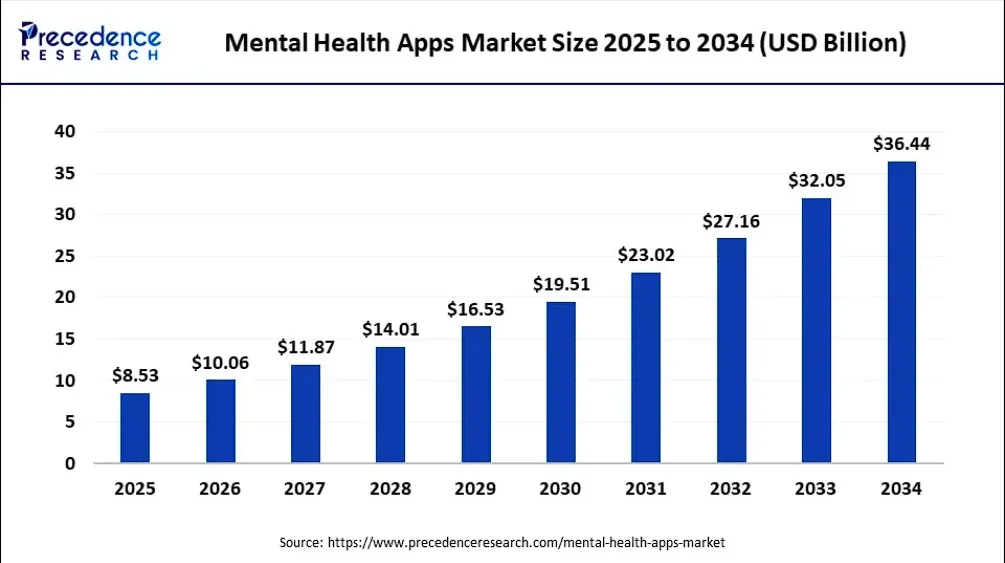
The global AI mental health apps market size in 2025 is estimated at USD 8.25 billion and is expected to reach USD 36.44 billion by the year 2034, growing at a compound annual growth rate of 17.56%. It reflects strong global momentum as digital mental health tools continue to expand across regions. Employers adopt them as part of wellness programs, while individuals use them for daily emotional care.
Several drivers explain this growth.
- Work related stress is rising.
- Remote and hybrid work increase isolation.
- Younger users prefer digital first support.
- Preventive care receives more attention than crisis response.
Most forecasts focus on growth trends rather than exact figures but the key signal is clear. AI mental health tools are becoming part of everyday health routines. Apps that focus on ethics, privacy, and emotional safety are better positioned for long term trust.
Yuna Health aligns with this direction. It focuses on daily emotional support and keeps boundaries clear. It supports people before stress becomes overwhelming.
Try For Free
Why Yuna Stands Out Among AI Mental Health Apps
People often feel overwhelmed after comparing many tools. This section explains why Yuna fits long term emotional care without making strong claims.
Coaching Model Instead of Therapy Claims
Yuna does not claim to treat or diagnose conditions. It works as a coach by helping users build daily emotional habits. It also avoids confusion about what AI can and cannot do. This clear position matters when choosing from the best AI mental health apps.
Calm Daily Emotional Support
Yuna focuses on steady use. Conversations are simple and grounded, so users can reflect without pressure. This helps emotional regulation over time rather than quick fixes.
Clear Boundaries and Safety Limits
Yuna sets limits. It does not act as a therapist. It encourages outside help when needed. Crisis boundaries are clear. This supports ethical use of mental health AI chatbots.
Designed for Long Term Use
Many apps feel intense at first and then fade. Yuna is designed for daily consistency. Short interactions make it easier to return. This supports emotional habits instead of one time relief.
Ethical AI With Privacy Control
Yuna uses encrypted data. Users control their information and personal conversations are not shared. This builds trust in a space where privacy matters.
Try Yuna For Free
Free AI Mental Health Apps vs Paid Options
Many people look for free AI mental health apps first. Cost and access matters, and free tools often provide a starting point.
Free apps usually include basic features. These may include mood tracking or simple chat responses. Some also include limited exercises. These tools can help users explore emotional awareness.
Limits appear over time as free tools may lack depth. They may not support daily habits well. Also, updates and guidance may feel inconsistent.
Paid options often offer structure. They support ongoing use and focus on consistency rather than volume. Yuna focuses on value through daily emotional guidance instead of feature overload. This approach supports long-term use rather than short trials.
Try Yuna — Your AI Mental Health App For Free
Where Can I Find an AI Mental Health App?
The answer depends on trust and access.
Most apps are available through mobile app stores. Some are offered through employer wellness programs or employee assistance programs. Others are listed on mental health platforms or research based directories.
Wherever you search, review privacy policies first. Read how data is stored and check how claims are explained. Avoid apps that promise cures. Look for tools that respect emotional safety and clear limits, such as Yuna Health.
Experience AI Mental Health Support With Yuna For Free
Yuna Health: Best AI Mental Health App
AI tools support emotional health. They are not cures but they offer steady guidance and also protect privacy, while keeping boundaries clear.
Yuna fits this role by working as a calm AI mental health coach. It supports daily reflection and grounding. It gives people space to process emotions safely without replacing therapy. It complements care by helping people stay emotionally steady.
Try Yuna For Free