


After the pandemic, companies now prioritize employee well-being far more seriously. Stress, burnout, and disengagement have increased across workplaces. These factors contribute to the necessity of having a healthy and motivated workforce for organizational success. Research shows a strong link between well-being and retention, with employees who feel supported being 69% less likely to seek a new job.
Yet many employees still report unmet mental health needs, and surveys show high levels of stress across industries. This highlights the need for scalable, personalized well-being solutions that go beyond generic programs.
AI now plays a crucial role in this shift. It enables adaptive, data-driven wellness support that fits individual needs. One-size-fits-all strategies no longer work, and HR teams must embrace AI-driven personalization to support diverse workforces effectively.
The Evolution of AI in Workplace Well-being
To understand AI’s impact today, let’s see how its role has changed within HR over the years.
From HR Analytics to Human-Centered AI in Mental Health
AI in workplaces began as tools for HR analytics, handling data on performance, turnover, and recruitment. Now, it’s evolving into a human-centered ally for employee wellness.
Modern AI personalizes wellness by tracking engagement, burnout signals, mood patterns, and more. According to a 2025 report by Alight, AI-powered personalization is transforming how companies support employees’ wellbeing.
With this shift, AI becomes not just an analytics engine but a wellness companion that helps prevent burnout and sustain engagement.
Rise of AI-Powered Coaching Platforms and Mental Health AI Assistants
Think of today’s AI-driven coaching platforms as mental health AI chatbots or mental health AI assistants, which are reshaping employee support. These tools are available 24/7, always listening, always ready to help with stress, morale, and emotional well-being.
They combine conversational AI with data insights to guide employees toward better stress management, work habits, and personal wellness. Companies adopting such AI mental health coaching often report higher morale, better productivity, and stronger engagement, especially in remote or hybrid teams.
These AI coaching platforms represent more than a tech fad and are considered as a reliable tool to support workplace well-being.
How Personalized AI Mental Health Coaching Works
At the core of AI coaching lies its ability to learn from each user and deliver insights tailored to their behavior.
Adaptive Learning and Data-Driven Insights in AI Mental Health Support
AI coaching platforms collect behavioral and productivity data for each user. Through machine learning, the platform recognizes patterns: maybe certain workloads cause stress, or certain times of day invite fatigue.
Based on this, the AI creates customized wellness paths. It might recommend micro-breaks, mindfulness exercises, or changes in work patterns; tailored to that employee’s habits. This adaptive learning helps companies deliver wellness programs that fit each individual, which is not a generic “one-size-fits-all”.
Real-Time Emotional Intelligence with Mental Health AI Chatbots
Modern mental health AI apps also employ technologies like natural language processing (NLP) and sentiment analysis. They can sense emotional tone and mood from employee inputs; for example via journaling, chat, or feedback.
This lets AI offer reflective feedback loops, emotional check-ins, stress-management prompts, or suggestions for breaks. As one recent study on AI in workplace wellness reflects, such AI tools help employees manage stress and emotional fatigue more effectively.
Integration of AI Mental Health Tools with HR Systems
For companies, a big plus is that AI coaching platforms can integrate with existing HR systems, like Learning Management Systems (LMS), engagement dashboards, or wellness benefit tools.
This AI and HR collaboration enables seamless data exchange, personalized nudges, unified reporting, and real-time well-being dashboards for HR teams. It makes wellness scalable, measurable, and actionable across the organization.
Benefits of Personalized Mental Health AI Coaching for Organizations
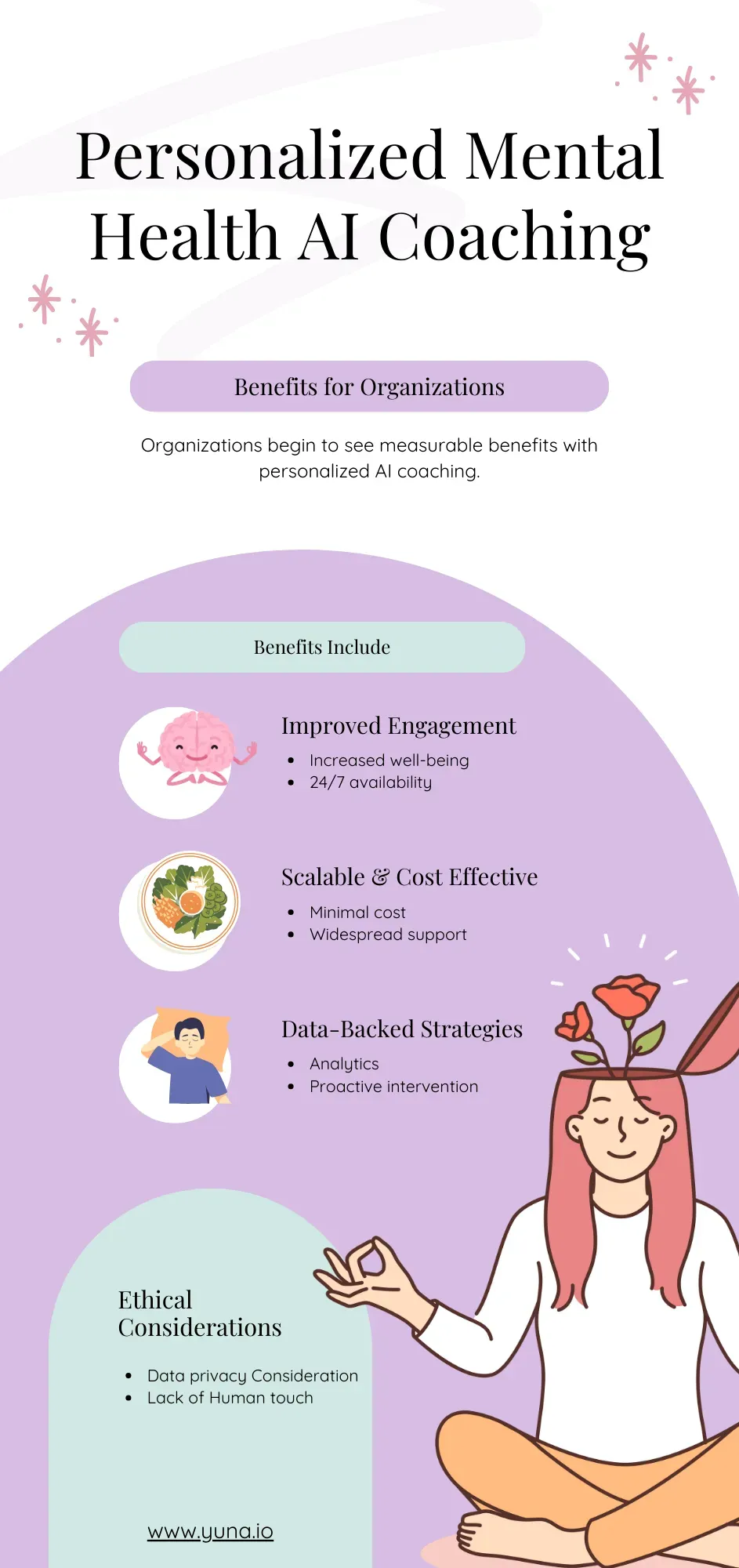
With these foundations in place, organizations begin to see measurable benefits.
Improved Engagement and Retention with AI-Driven Mental Health Solutions
When employees feel their well-being matters, they stay longer. Personalized wellness powered by AI makes support constant and inclusive. According to data from SHRM, well-being programs tailored to individuals can improve retention by up to 33%.
Further, AI coaching makes wellness accessible round-the-clock, ensuring support for remote, hybrid, or global teams.
Scalable and Cost-Effective AI Mental Health Support
Traditional coaching or therapy for entire teams can be costly and logistically challenging. AI coaching once deployed can serve many employees across locations with minimal incremental cost.
Hence, AI makes personalized well-being both scalable and affordable. It democratizes access to mental health support without sacrificing quality.
Data-Backed Well-being Strategies Using AI in Mental Health
With AI-powered mental health support, HR leaders get analytics. They can spot trends, like rising stress in certain teams, frequent burnout triggers, or morale dips.
These data-backed insights allow proactive interventions and help in early mental health diagnosis. Rather than reacting to burnout or turnover, HR can act early by changing workloads, offering support, or triggering wellness campaigns.
Ethical and Implementation Considerations in AI Mental Health Apps
Adopting AI in well-being programs also requires careful consideration of ethics and privacy.
Data Privacy and Trust
With personalized data comes responsibility. Employee behavioral data, emotional inputs, and wellness history are sensitive.
HR teams must ensure transparent, privacy-first data policies. Consent, clear usage boundaries, and compliance with regulations (like GDPR) are vital. Without trust, employees may resist using such tools, defeating the purpose.
Human Touch in AI Coaching
AI is powerful, but not perfect. Emotional support often benefits from human empathy, nuance, and empathy-driven care. Many voices in communities, including across forums like reddit emphasise that people value “human empathy combined with AI efficiency.”
That suggests a hybrid model may work best: combine AI’s 24/7 availability and consistency with human-led counselling or HR check-ins when needed.
Future Outlook: The Impact of AI on Mental Health and Employee Well-being
Looking ahead, AI’s capabilities will continue to advance, shaping the next evolution of employee wellness.
Predictive and Preventive Wellness
Looking ahead, AI will become even more proactive. Future models may predict emotional fatigue, disengagement, or burnout before symptoms emerge.
With wearable data, biometrics, and behavioral monitoring, AI could personalize wellness prompts, maybe a gentle reminder to stretch, meditate, or rest; exactly when needed. This could transform how organizations care for mental health.
Strategic Role of HR in AI Adoption
Adopting AI wellness tools isn’t just a tech decision. HR leaders must see themselves as change agents. Ethical adoption requires aligning AI use with company culture, ensuring transparency, managing data responsibly, and building trust.
Investing in internal AI literacy and preparing teams to support and guide employees through this transformation will be the key.
Yuna’s Role in Personalized Mental Health AI Coaching
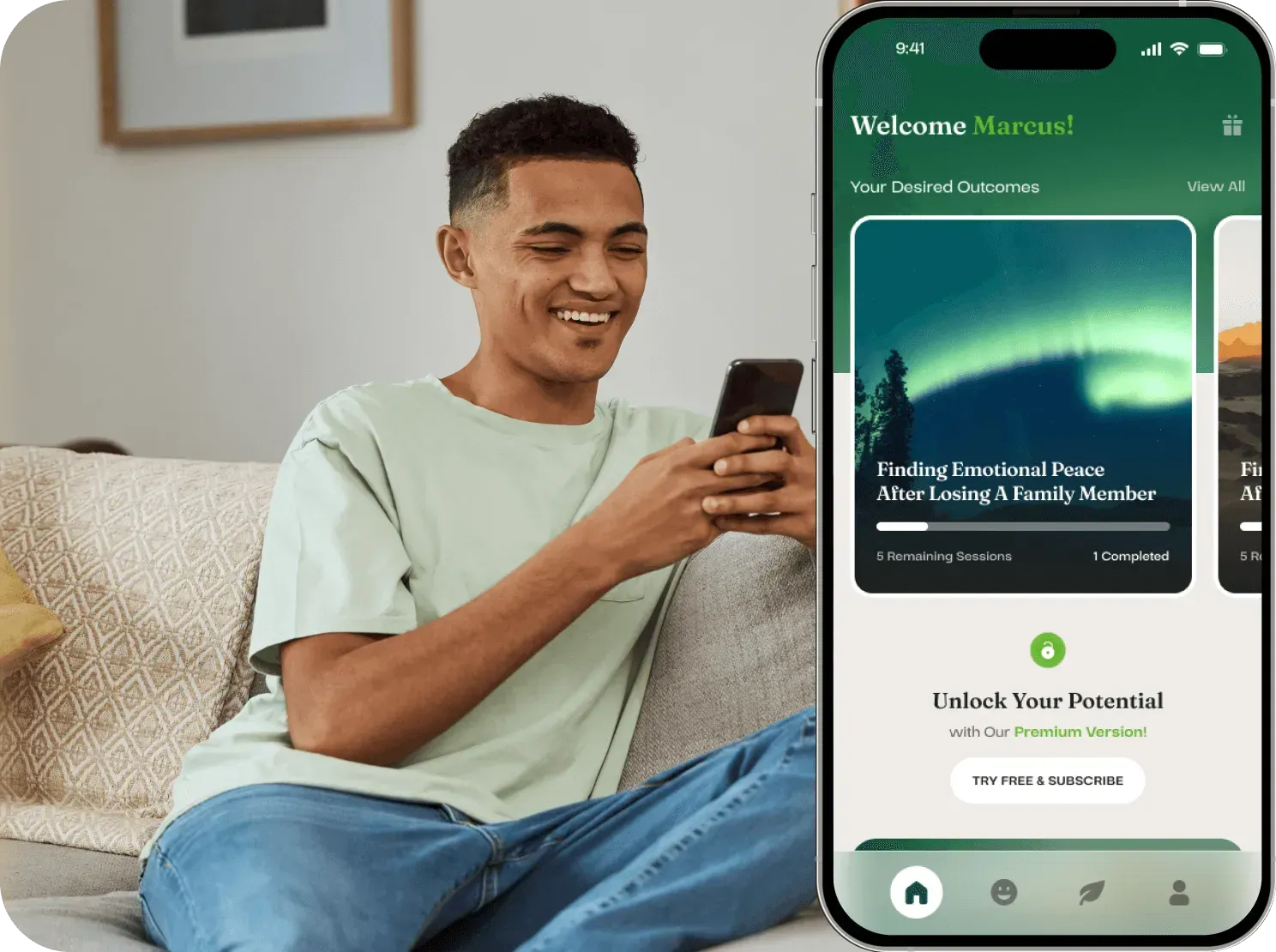
Among emerging solutions, Yuna stands out by offering a deeply personalized and thoughtful approach to AI coaching.
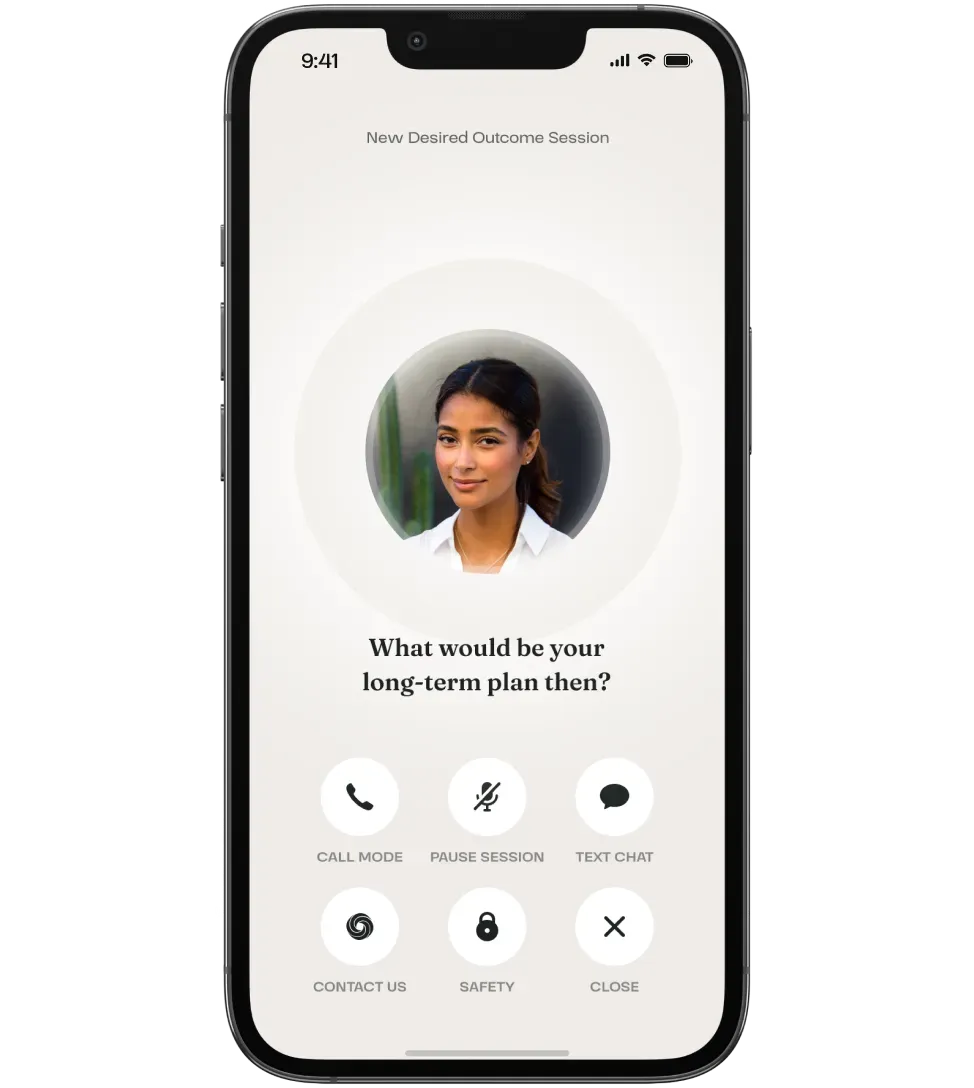
Yuna stands out as a cutting-edge mental health AI assistant built for individuals and enterprise teams. Yuna provides emotional wellness tracking and adaptive support tailored to each user’s needs.
Because Yuna integrates smoothly with HR tools, companies can use it to deliver consistent wellness support; whether teams are in-office or remote. With its privacy-first design, Yuna helps build trust across employees.
Behind the scenes, Yuna’s AI-driven feedback loops evolve as the employee’s journey unfolds learning from inputs and offering increasingly personalized support.
FAQs
1. How does AI deliver personalized healthcare?
AI personalizes healthcare by analyzing patterns in medical records, symptoms, lifestyle data, and real-time inputs. It identifies risks early, recommends tailored treatments, and predicts health trends more accurately than manual assessment.
AI-driven monitoring tools also track ongoing changes and adapt care plans instantly. This level of personalization supports faster diagnosis, better prevention, and more precise interventions, helping patients receive care that aligns closely with their unique health needs.
2. What goes into creating an AI-based coaching system?
Building an AI coaching model involves defining clear coaching goals, collecting quality training data, and designing conversational flows that feel natural and supportive. Developers use machine learning and NLP to help the model understand user inputs and deliver personalized guidance.
Continuous feedback loops, safety checks, bias reduction, and real-world testing ensure accuracy and empathy. Integrating human oversight strengthens trust and improves the system’s effectiveness across wellness and performance coaching.
3. How can AI be used to strengthen mental well-being?
AI improves mental health by offering private, stigma-free support through chatbots, mood tracking apps, and emotional check-in tools. It analyzes patterns in mood, sleep, and behavior to detect early signs of stress or burnout.
AI can suggest coping strategies, provide guided reflections, or escalate serious concerns to human experts. This combination of real-time insights and personalized guidance makes mental health support more accessible, immediate, and preventive.
4. How does AI influence employee well-being?
AI enhances employee well-being by identifying stress patterns early, offering personalized wellness insights, and enabling private emotional check-ins. It helps HR teams track organizational mood trends and design better support programs.
AI tools can also automate routine tasks, reducing workload pressure and preventing burnout. When combined with human guidance, AI encourages healthier communication, timely interventions, and a more supportive workplace culture where employees feel seen, safe, and emotionally supported.