


Workplaces are adopting AI-driven mental health tools faster than ever. Companies hope these tools will support well-being, reduce burnout, and give employees a private space to process stress. Many leaders assume AI will be neutral and objective. They assume algorithms will remove human bias from support and decision making.
However, the reality is more complicated. AI systems learn from human data, and human data carries bias. When mental health AI absorbs biased assumptions, it can quietly reinforce inequities at work. For HR and DEI leaders, this matters. Biased mental health support can harm inclusion efforts, discourage vulnerable employees from seeking help, and widen gaps between groups who already experience unequal care.
Research from sources like Harvard Business Review and the World Economic Forum shows that AI bias affects frontline workforces and people processes across industries. When applied to mental health, the stakes become personal and sensitive.
This guide explains how bias shows up in mental health AI, why it is harder to detect than other workplace biases, and what leaders can do to make support more inclusive.
Try For Free
What Bias in Mental Health AI Actually Means
AI does not invent bias out of nowhere. It learns patterns from training data and previous interactions. If that data lacks cultural, gender, linguistic, or neurodivergent diversity, the system will struggle to understand how real people express stress, anger, fear, or burnout.
Bias in mental health AI can come from several sources:
Training Data Bias
Most psychological research data overrepresents Western, white, educated, and neurotypical samples. This makes emotional models less accurate for other groups.
Language Model Bias
Emotional language varies by culture, gender, age, and neurodiversity. What sounds like panic in one context may be a normal emotional expression in another.

Outcome Bias
AI that attempts to “score” stress, risk, or emotional stability may apply norms rooted in majority populations.
Bias becomes harder to detect in mental health contexts because feelings are expressed differently across cultures. Some cultures use indirect language for distress. Some express emotion physically rather than verbally. Some shape emotional tone around politeness, hierarchy, or gender. Research from Nature and MIT Technology Review highlights these structural issues in training data and model interpretation.
Try For Free
How Biased Mental Health AI Can Harm Workplace Diversity
Biased mental health support does not always look like outright discrimination. More often it shows up as quiet under-support or misinterpretation.
Possible harms include:
Under-supporting certain groups
Women, ethnic minorities, LGBTQ+ employees, and neurodivergent employees often express distress differently. AI can miss their signals.
Misinterpreting emotional tone
Direct communication from some groups may be labelled as anger or risk. Reserved communication may be treated as coping well.
Reinforcing stereotypes in emotional categorisation
If emotional norms are narrow, anything outside the pattern becomes a red flag instead of a different cultural norm.
Unequal access to effective support
Employees who do not “fit the model” may disengage from digital tools they find inaccurate or alienating.
Sources like the APA and Brookings Institution have shown how cultural bias in mental health assessment has real-world consequences. If workplace mental health AI repeats the same patterns, inclusion efforts suffer silently.
Try For Free
The DEI Blind Spot: Why This Often Goes Unnoticed
Mental health AI tools are often purchased as plug-and-play solutions. HR leaders may not see how the underlying models are trained. Many teams do not know which populations shaped the baseline emotional assumptions. Bias in mental health support does not always show up in dashboards, because disengagement looks like quiet non-usage rather than formal complaints.
Employees may never report harm. Instead, they stop using the tool and rely on coping strategies alone. In forums and anonymous discussions, employees often share that they do not want mental health conversations tied to HR or performance. They want support that does not feel monitored, judged, or labelled.
Research from Grey Matters Journal and OECD reports shows that trust and transparency are essential for adoption. When trust breaks, marginalized employees disengage first.
Try For Free
Why Fairness Matters Specifically in Mental Health AI
Mental health data is intimate, emotional, and context dependent. Misinterpretation can cause real harm. Biased tools may:
- Miss early burnout signals in some groups
- Over-pathologise stress in others
- Create distrust in well-being programs
- Widen mental health access gaps
The World Health Organization highlights the ethical sensitivity of AI in health contexts, where fairness and context shape safety. Fair access to support is a DEI issue, not only a technical one.
Try For Free
What HR and People Leaders Should Look For
Leaders do not need to be algorithm experts. They do, however, need better questions.
Key criteria include:
- Diverse and representative training data
- Cultural and contextual sensitivity
- Transparency about how insights are generated
- Clear boundaries between support and diagnosis
- No surveillance or emotional scoring tied to performance
- Regular bias audits across demographic groups
- Privacy and data protection that respects consent
Frameworks from IBM and the European Commission reinforce similar guidance for trustworthy AI adoption.
Try For Free
Emerging Best Practices for Inclusive Mental Health AI
Responsible design practices are developing quickly. Best practices include:
- Human-in-the-loop design: Humans review edge cases and cultural interpretation.
- Bias testing across demographic subgroups: Emotional norms are not universal.
- Privacy-first and opt-in usage models: Well-being should not become performance data.
- Positioning AI as empowerment, not control: Support tools should help employees, not monitor them.

Stanford HAI and MDPI discuss human-centered approaches that respect individual agency in AI mental health contexts.
Try For Free
How Yuna Supports Inclusive and Responsible Mental Health AI
Bias in mental health AI is not only a technical challenge. It is a workplace equity challenge. Employees from diverse backgrounds deserve support that respects their emotional language, cultural context, and privacy.
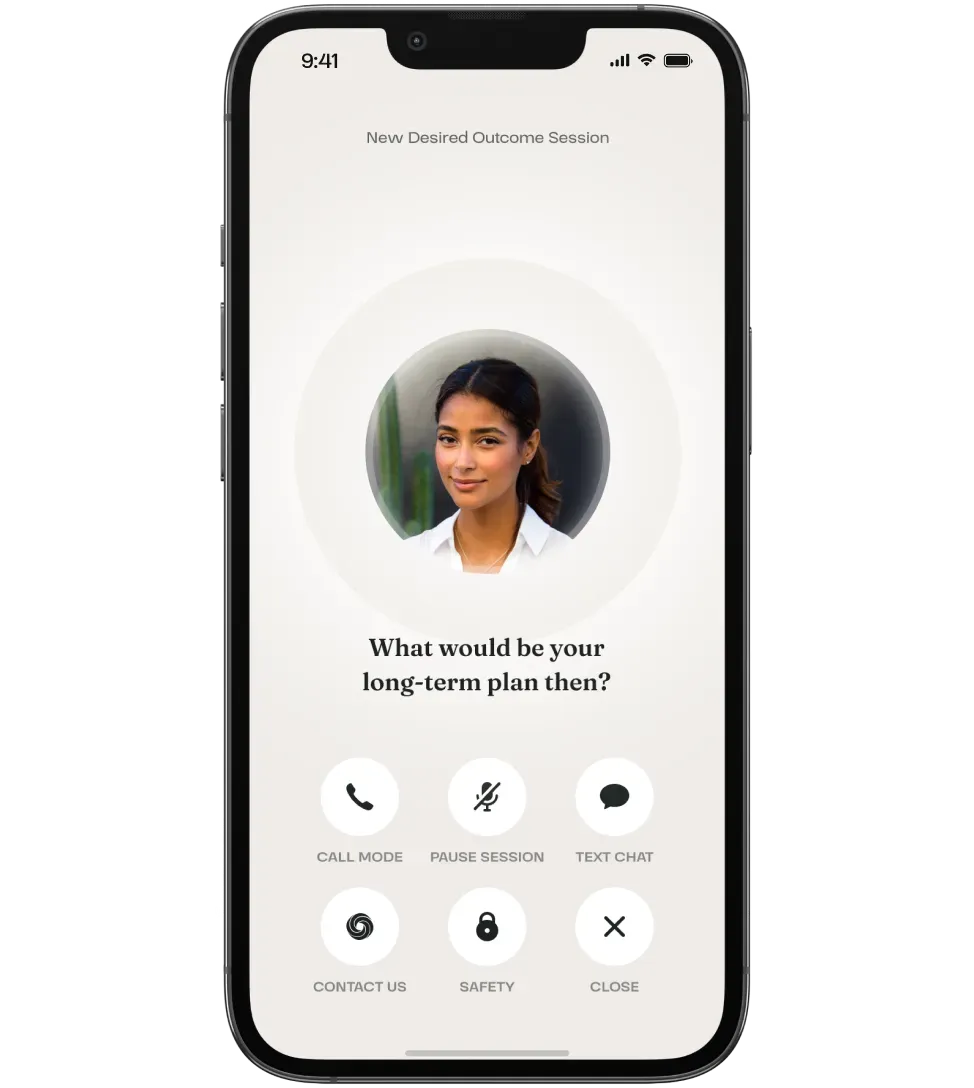
Yuna takes a different approach to workplace mental health technology:
- Privacy-first design
- Non-judgmental emotional support
- No diagnosis, scoring, or surveillance
- No categorizing employees based on emotion
- Self-guided journaling, grounding, and reflection
- Support for mild-to-moderate stress, burnout, and self-doubt
Yuna empowers employees instead of monitoring them. It complements DEI, HR, and wellness strategies without forcing disclosure or tying mental health to performance.
For workplaces that want mental health support without sacrificing trust, Yuna offers a safer pathway.
If you want to explore how Yuna fits into your workplace well-being programs, we can share more.
Try For Free
Data Sources:
- https://hbr.org/insight-center/ai-and-bias
- https://www.weforum.org/stories/2025/10/ai-frontline-workforce/
- https://www.nature.com/articles/s44184-024-00057-y
- https://www.technologyreview.com/2019/02/04/137602/this-is-how-ai-bias-really-happensand-why-its-so-hard-to-fix/
- https://www.apa.org/monitor/2019/03/cultural-competence
- https://www.brookings.edu/articles/algorithmic-bias-detection-and-mitigation
- https://greymattersjournaltu.org/issue-2/cultural-biases-surrounding-the-diagnoses-of-mental-illness
- https://oecd.ai/en/wonk/anthropic-practical-approach-to-transparency
- https://www.who.int/publications/i/item/9789240029200
- https://www.ams-inc.on.ca/project/alls-fair-in-health-and-ai-building-fairness-into-health-ai-models-from-the-start/
- https://www.ibm.com/topics/ai-fairness
- https://digital-strategy.ec.europa.eu/en/library/ethics-guidelines-trustworthy-ai
- https://online.stanford.edu/schools-centers/stanford-institute-human-centered-artificial-intelligence-hai
- https://www.mdpi.com/2076-0760/12/1/32
Try For Free