


Mental health issues such as stress, burnout, anxiety, and emotional fatigue affect teams everywhere. These pressures have grown due to remote work, long screen hours, and rising workloads. Research from the World Health Organization shows that depression and anxiety cost the global economy more than $1 trillion every year in lost productivity. Another report suggests that mental health challenges contribute to absenteeism, presenteeism, and rising turnover.
To support employees, workplaces are now building structured initiatives known as workplace mental health programs. These programs focus on emotional, psychological, and social well-being. They include employee assistance programs, training for managers, easier access to care, digital mental health tools, and culture-based support. Modern tools like Yuna offer emotional help that fits today’s work patterns.
Workplace mental health programs are now a key part of employee mental well-being at work. They help people feel supported and give leaders a clear path to build healthier teams.
What Are Workplace Mental Health Programs?
Workplace mental health programs are planned initiatives that improve emotional, psychological, and social well-being at work. These programs help employees feel more supported in their daily routines. They give people tools to manage stress, build resilience, and talk about emotional concerns in a safe way.
Some programs are preventive. They focus on building strong habits, communication, and awareness. Other programs offer more direct support when someone feels overwhelmed. Companies often use a mix of both to create a healthy environment.
Common examples include employee assistance programs, mental health training for managers, workshops, wellness seminars, and peer support groups. Many workplaces also include access to therapy, mental health coaching, or stress-relief sessions such as meditation or breathwork. Digital mental health tools are now becoming a central part of these programs. These tools give employees space to reflect, track their mood, or practice grounding exercises.
Modern programs often combine traditional support with new tools like AI mental health support. These tools offer daily check-ins, emotional reflection, and simple guidance. Yuna serves as one of the best examples. It helps employees build emotional awareness through short and supportive conversations.
Workplace mental health programs give employees options that fit their needs and comfort levels. This creates more steady and consistent support at work.
Why Workplace Mental Health Programs Matter
When these programs are available, employees feel safer and more supported. This affects both individuals and the organisation. Before exploring each impact in detail, it helps to understand why this topic matters for business leaders today. Clear programs help employees stay healthy and help companies build stronger teams. They also reduce financial losses caused by stress and burnout.
Productivity
Mental health challenges affect concentration, energy, and decision-making. Many employees struggle quietly, which slows down their work. Mind Share Partners reports that about 50% of workers face burnout, depression, or anxiety. When programs offer early support, people recover faster and work more steadily.
Turnover
Employees often leave workplaces that feel unsupportive. Many want employers who take mental health seriously. The American Psychological Association states that 81% of workers want better mental health support. When companies offer clear programs, people are more likely to stay.
Engagement
Employees work better when they feel valued. Poor mental health reduces interest in tasks and creates emotional distance. The WHO report states that 12 billion working days are lost each year because of mental health issues. Strong programs boost engagement and help people reconnect with their work.
Safety
Stress and burnout increase the chance of mistakes and unsafe actions. Employees may feel overwhelmed and struggle to focus. Programs that offer mental health support at work help reduce these risks.
Morale
A supportive environment boosts morale in the workplace and improves team spirit. Employees feel appreciated when leaders invest in their well-being. Forum discussions often reveal that many workers do not know where to find help. HR teams also mention low usage of employee assistance programs. Managers often feel unprepared to address stress. Workplace mental health programs solve these pain points by giving clear and accessible support options.
Effective programs support both the people and the business. They create a workplace where employees feel safe, steady, and connected.
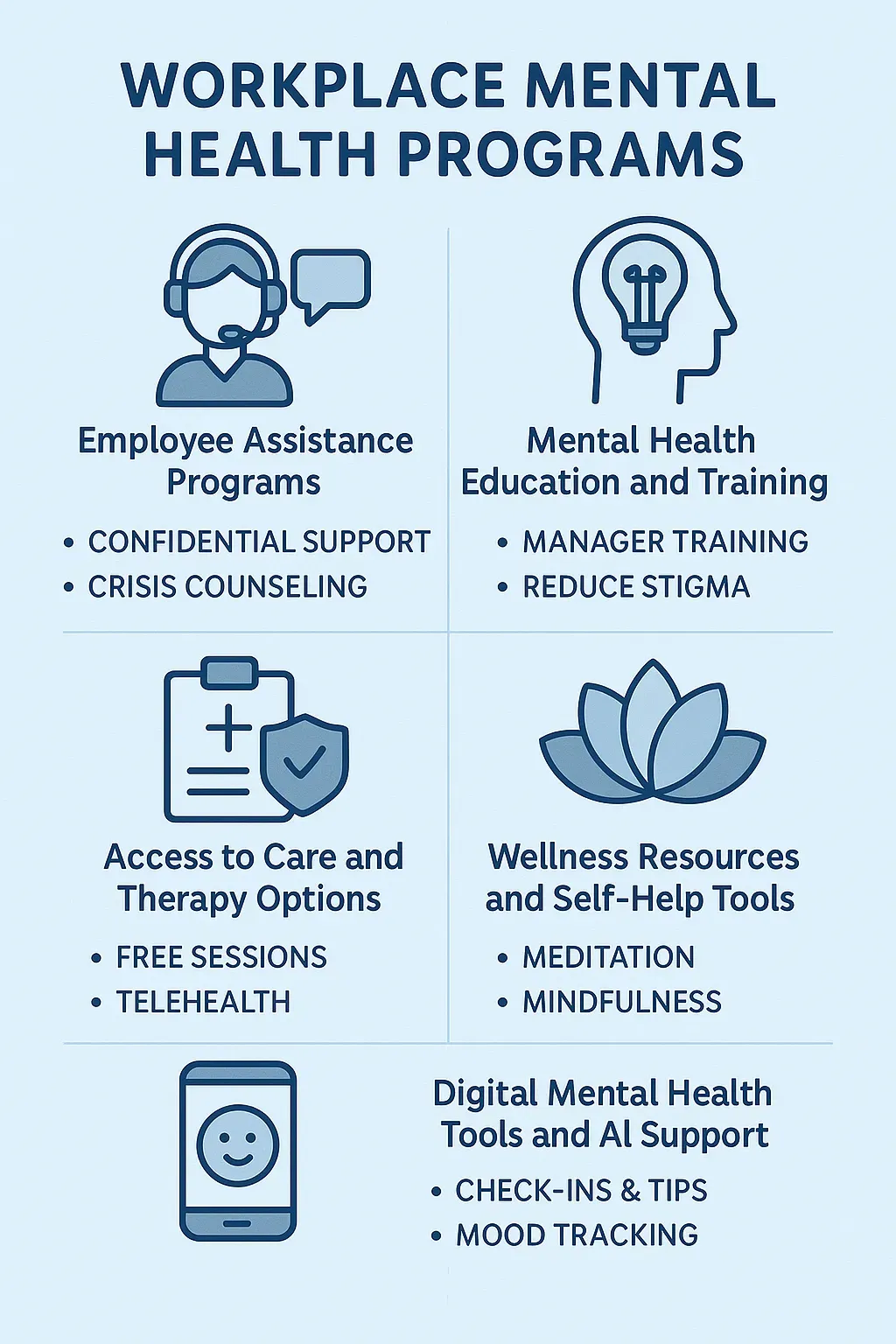
Types of Workplace Mental Health Programs
There are many ways to support mental health at work. Before exploring each option, it helps to understand that programs work best when combined. A workplace that offers both human support and digital help gives employees more choices and comfort.
Employee Assistance Programs (EAPs)
Employee assistance programs offer confidential counseling and crisis support. They help employees speak with trained professionals about stress, family issues, or emotional concerns. EAPs have been a common option for many years. However, usage rates are often low. Some employees worry about privacy. Others find the format slow or not personal enough. Because of this, companies now combine EAPs with more flexible tools.
Mental Health Education and Training
Training helps managers understand emotional stress and respond with care. It also helps reduce mental health stigma at work. When leaders talk openly about mental health, employees feel safer. McKinsey research shows that stigma remains one of the biggest barriers to seeking help as 80% of employees do not seek mental health support because of workplace stigma. Training creates awareness and builds confidence for hard conversations.
Access to Care and Therapy Options
Some companies offer free therapy sessions, reimbursements, or telehealth services. These options give employees direct support from licensed professionals. Cost can be a barrier for many people, so access programs help remove that pressure. They also show employees that the organisation cares about emotional well-being.
Wellness Resources and Self-Help Tools
Wellness resources include meditation sessions, breathwork, short mental breaks, mindfulness rooms, or wellness workshops. Self-help tools also include grounding techniques and journaling exercises.
Digital Mental Health Tools and AI Support
Digital mental health tools are now a major part of workplace mental health programs. These tools offer daily check-ins, emotional reflection, coping suggestions, and small mood-reset practices. They help people who may not want therapy or may not feel ready to speak with HR. Yuna fits well here by offering a private space for employees to reflect and build emotional balance.
Supportive Workplace Culture
No program succeeds without psychological safety. Culture shapes how comfortable employees feel when discussing stress. A supportive and inclusive culture includes healthy boundaries, flexible work, open conversations, and trust between teams.
Why AI Therapy Apps Are Becoming Part of Workplace Mental Health Programs
AI therapy apps are becoming common in modern well-being strategies. They give employees private emotional support that fits daily routines. Before exploring each benefit, it helps to understand that these tools work best when used with human support. They do not replace therapy. They only add comfort and structure during moments when people feel stressed at work.
Private and Constant Support
AI mental health therapy tools give employees round-the-clock support. People often feel stressed during late nights, early mornings, or long work cycles. Traditional services are not always available at these times. AI therapy apps fill this gap. They allow employees to speak freely without fear of judgment.
Yuna works in this space by helping people process emotions through short, steady conversations. It supports employees in a gentle way and helps them feel less alone during difficult moments, acting as an AI mental health coach.
Early Stress Signals and Burnout Detection
AI tools can help detect early signs of burnout. These tools look at journaling patterns, mood entries, and emotional changes. They do not reveal personal conversations. They only show general trends. HR teams can use these trends to understand where stress is rising across departments. This helps prevent burnout before it becomes serious.
Yuna offers this type of insight through anonymized patterns. It keeps employee privacy safe while helping workplaces respond with care.
Daily Emotional Practices and Simple Exercises
AI therapy apps include features that support steady emotional well-being. These include journaling, mood tracking, cognitive reframing, and grounding exercises. These simple practices help people manage daily stress and deal with panic attacks at work. Yuna provides these exercises in a warm and practical format. It uses evidence-based ideas to support emotional balance without overwhelming the user. It also works well with other mental health apps and traditional programs.
AI therapy apps now play an important role in workplace mental health programs. They give employees a safe and constant space to care for their emotions. They also help companies understand stress patterns without invading privacy.

How Yuna Fits Into Workplace Mental Health Programs
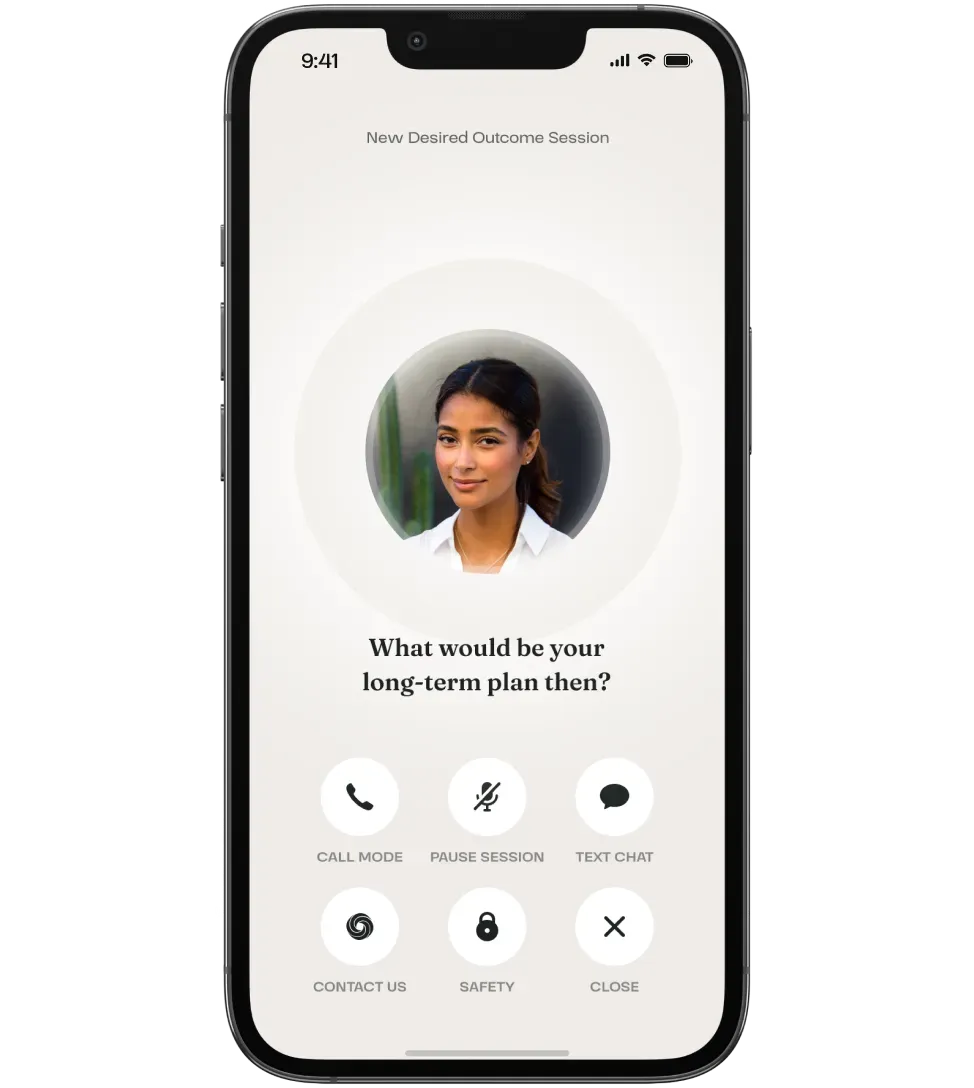
Yuna works as a mental health coach (not an AI therapist) that supports employees every day. It helps people check in with their emotions in a private and calm space. Yuna uses simple conversations and evidence-based practices like journaling prompts and grounding exercises. It helps people feel steadier during stressful work cycles.
HR teams receive anonymized insights that show stress patterns in a department. These insights never include personal details. This helps leaders improve support where it is needed most. Yuna fills the gap between therapy sessions, EAPs, and manager support. It works well for remote teams, global teams, and environments where stigma around mental health is common.
How to Build or Improve a Workplace Mental Health Program
Workplace mental health programs grow stronger with a clear structure and evolve over time. They do not need to be perfect at the start. Small improvements create a more supportive environment for everyone.
Start With Employee Needs
Understanding employee needs is the first step. Surveys and pulse checks help companies learn how people feel. Workers can share what stresses them and what support they want. These insights guide the design of workplace mental health programs. When employees feel heard, they become more engaged.
Offer Multiple Access Points
People need different types of support. Some prefer human help, while others may prefer privacy. A strong program offers many paths, including EAPs, digital tools, manager training, workshops, and culture-building activities. Yuna fits into this mix by giving employees a private space to reflect and calm their mind.
Train Managers
Managers influence emotional safety every day. Training helps them respond to stress with care. Many employees avoid speaking up because they fear judgment. When managers learn how to support mental health, teams feel safer. This increases trust and makes conversations easier.
Create Clear Communication Channels
Employees need to know where to find help. Workplaces should list available programs clearly. This includes EAP details, digital tools like Yuna Health, and internal contacts for emotional support. Clear communication removes confusion and helps employees reach support faster.
Use Data to Track Progress
Data helps leaders understand what is working by tracking absenteeism, engagement levels, and usage of mental health tools. Digital tools like Yuna also show anonymized emotional trends. These insights help workplaces make informed decisions. Over time, data creates a more responsive and supportive culture.
Workplace Mental Health Program with Yuna
Workplace mental health programs are now essential. They help employees feel safe, valued, and supported, which improves employee retention. Strong programs improve productivity, reduce turnover, and build a healthier culture. Digital tools play a growing role, especially for teams that need round-the-clock support.
Yuna offers a simple and private way for employees to care for their emotions. It supports people during stressful moments and helps leaders understand general stress patterns. It fits into any well-being strategy and supports employees in daily life. Leaders can take small steps today to build a more supportive environment.