
Workplace wellness programs are everywhere, but participation and results vary widely. This Workplace Wellness Statistics roundup explains who offers wellness programs, how employees engage with them, and what outcomes employers actually see.
We collected these statistics from trusted online sources, and we have shared all source URLs at the end of the article for full transparency.
Key Workplace Wellness Statistics for 2026
- 51% of U.S. employers with 50 or more employees offer a workplace wellness program.
- 79% of employees at organizations with 50 or more employees have access to a wellness program, even though only about half of employers formally offer one.
- 77% of employers with wellness programs offer lifestyle management programs, with nearly 80% providing nutrition and weight management activities and 77% offering smoking cessation programs.
- 56% of employers offer disease management programs, most commonly targeting diabetes (85%), followed by heart disease (60%), chronic lung disorders (59%), depression (54%), and cancer (51%).
- 65% of employers use Health Risk Assessments (HRAs), and 49% conduct biometric screenings to identify employee health risks.
- When offered, 46% of employees complete HRAs or clinical screenings, with participation ranging from 0% to 100% across employers.
- Participation in preventive lifestyle interventions ranges from 7% to 21%, with fitness programs showing the highest uptake at 21%, while half of employers report participation rates of 10% or less.
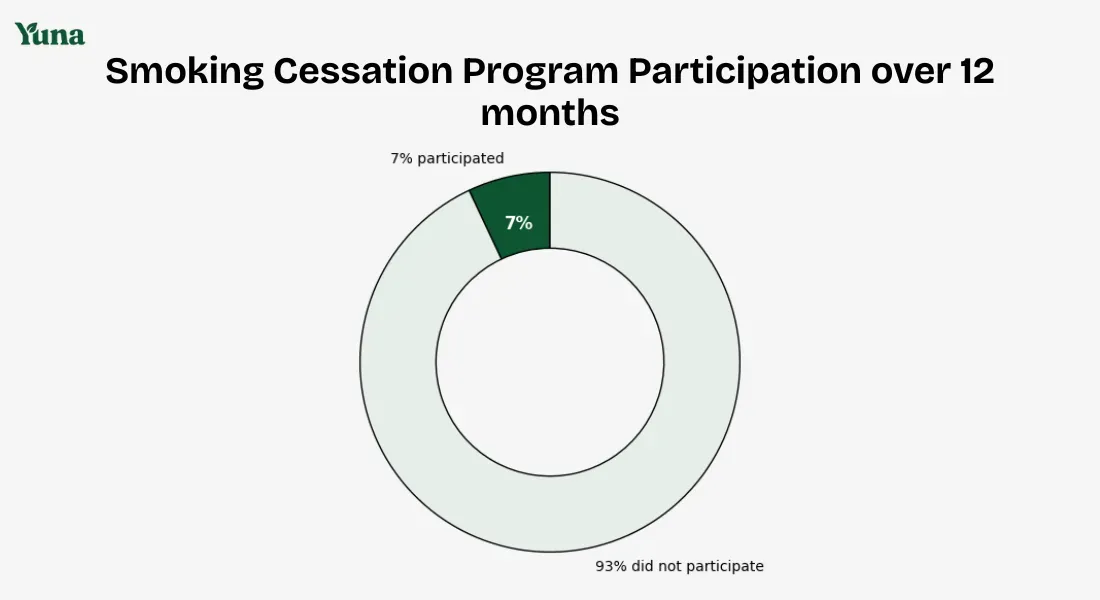
- Only 7% of employees who smoke participate in smoking cessation programs over 12 months.
- 65% of employers offering disease management programs report participation rates of 20% or less, and one in six employers report zero participation.
- Continuous participation in weight control programs over five years is associated with a 13% point reduction in obesity rates and a 14% point increase in normal-weight employees.
Growth of Workplace Wellness Programs Over Time
Workplace wellness programs have expanded gradually rather than explosively. Adoption has increased as employers respond to rising healthcare costs, workforce stress, and chronic disease risk, but growth has been uneven across regions, company sizes, and economic cycles. Long-term data show steady expansion before the pandemic, followed by a temporary contraction in spending and reach.
- Workplace wellness spending grew at an average annual rate of 4.6% between 2017 and 2019, reflecting increasing employer investment before the pandemic.
- In 2020, global workplace wellness spending declined by 7%, driven by business closures, budget cuts, and rapid shifts to remote work.
- The global workplace wellness market was valued at approximately $48.5 billion in 2020, down from its pre-pandemic peak.
- Despite market contraction, workplace wellness programs continued to reach an estimated 324 million workers globally, representing 10.2% of the global employed workforce.
- Access to workplace wellness programs remains concentrated among large employers and high-income countries, with significantly lower coverage in small organizations and developing economies.
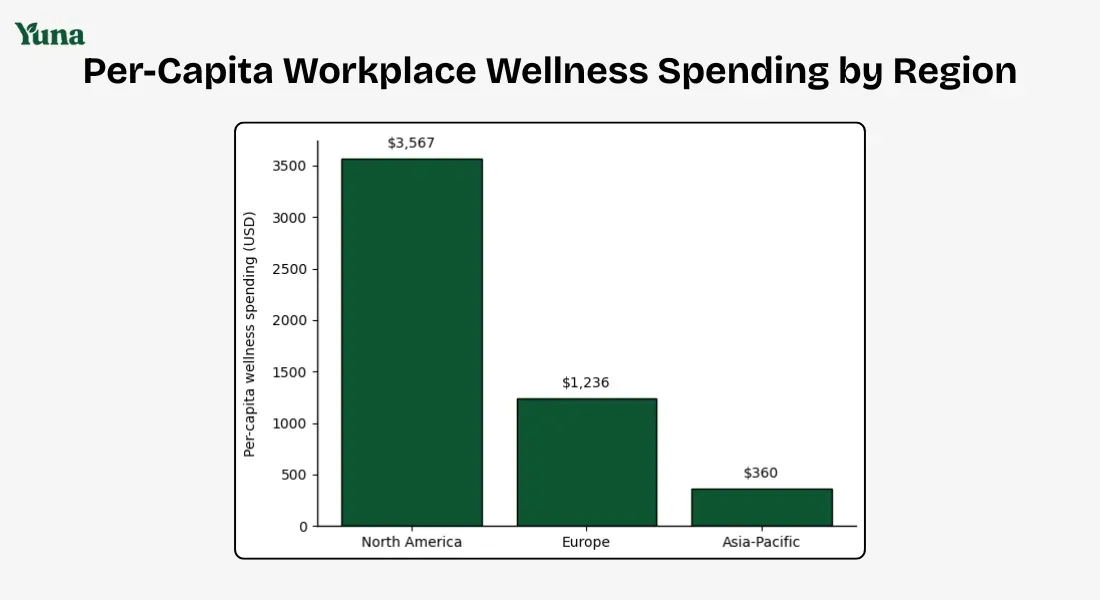
- North America leads global workplace wellness investment, with per-capita wellness spending of $3,567, compared to $1,236 in Europe and $359.74 in the Asia-Pacific region.
- While formal program adoption slowed during the pandemic, 86% of employers continued offering health promotion activities such as vaccinations, healthy food options, or wellness-related benefits.
- 61% of employers provide wellness-related benefits like Employee Assistance Programs (EAPs) or on-site clinics, even when not operating structured wellness programs.
- Mental health-focused wellness offerings expanded during this period, with 26.8% of organizations offering mental health-centric programs and 52% offering stress management interventions.
Employer Adoption and Program Structure
Workplace wellness programs vary widely in how they are designed and delivered. While many employers report offering wellness initiatives, the structure of these programs often determines whether employees actually engage with them. The data shows a clear pattern: employers tend to prioritize lifestyle-focused offerings, while more complex or long-term interventions see lower adoption and participation.
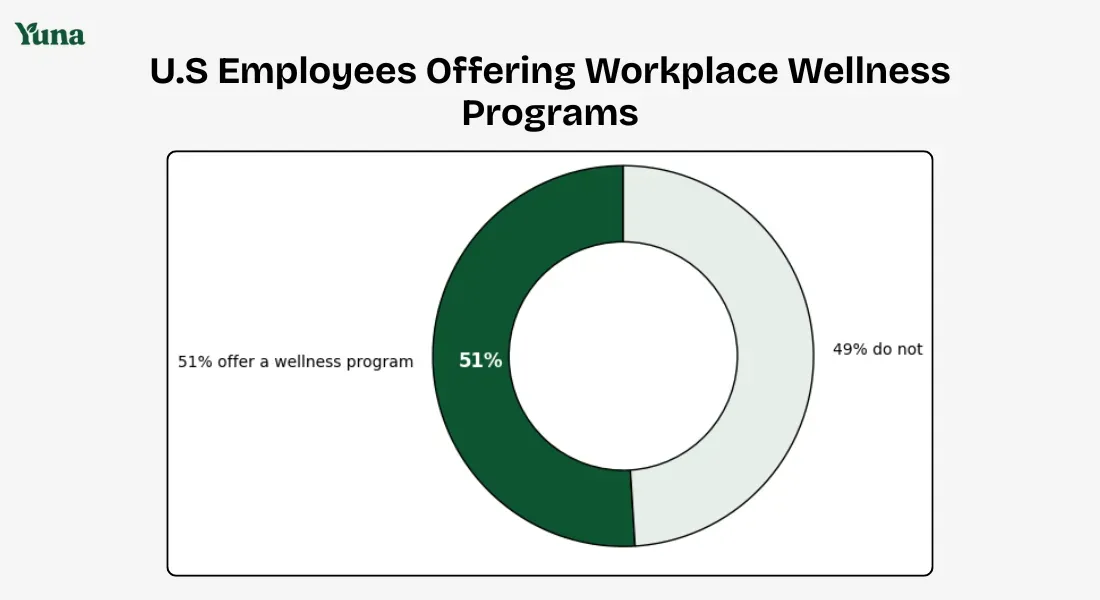
- 51% of U.S. employers with 50 or more employees report offering a formal workplace wellness program.
- Among employers that offer wellness programs, 77% provide lifestyle management programs, making this the most common program type.
- Within lifestyle management offerings, nearly 80% include nutrition and weight management activities, while 77% offer smoking cessation programs.
- 56% of employers with wellness programs offer disease management components.
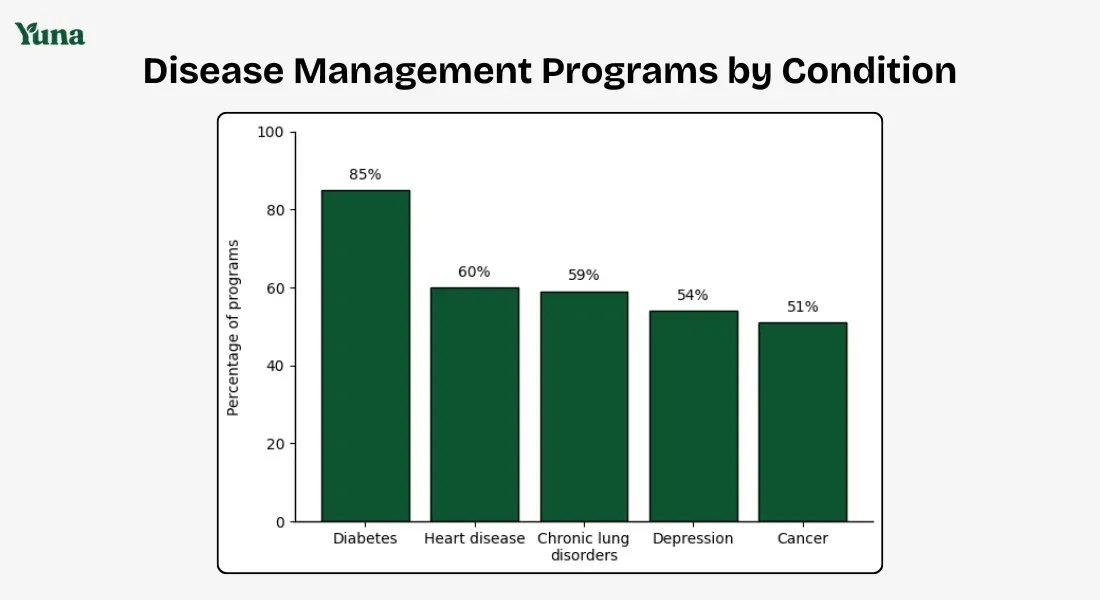
- Disease management programs most frequently target diabetes (85%), followed by heart disease (60%), chronic lung disorders (59%), depression (54%), and cancer (51%).
- 65% of employers use Health Risk Assessments (HRAs) as a core tool to identify employee health risks.
- 49% of employers conduct biometric screenings as part of their wellness program infrastructure.
Employee Participation and Engagement
Employee participation remains one of the biggest challenges in workplace wellness programs. While access to wellness initiatives is relatively high among larger employers, actual engagement often drops sharply once programs are offered. The data shows wide variation in participation rates across employers, program types, and intervention intensity.
- When offered, 46% of employees complete Health Risk Assessments (HRAs) or clinical screenings, with participation ranging from 0% to 100% depending on the employer.
- Participation in preventive lifestyle interventions typically ranges between 7% and 21% across organizations.
- Fitness programs see the highest participation, with 21% of targeted employees enrolling on average.
- Despite offering lifestyle management programs, 50% of employers report participation rates of 10% or less across their wellness initiatives.
- Smoking cessation programs show particularly low engagement, with only 7% of employees who smoke participating over 12 months.
- Disease management participation is even more limited, with 65% of employers reporting participation rates of 20% or less.
- One in six employers offering disease management programs report zero employee participation.
- Awareness does not consistently translate into action, as 73% of employees report being aware of workplace wellness programs, but many do not engage.
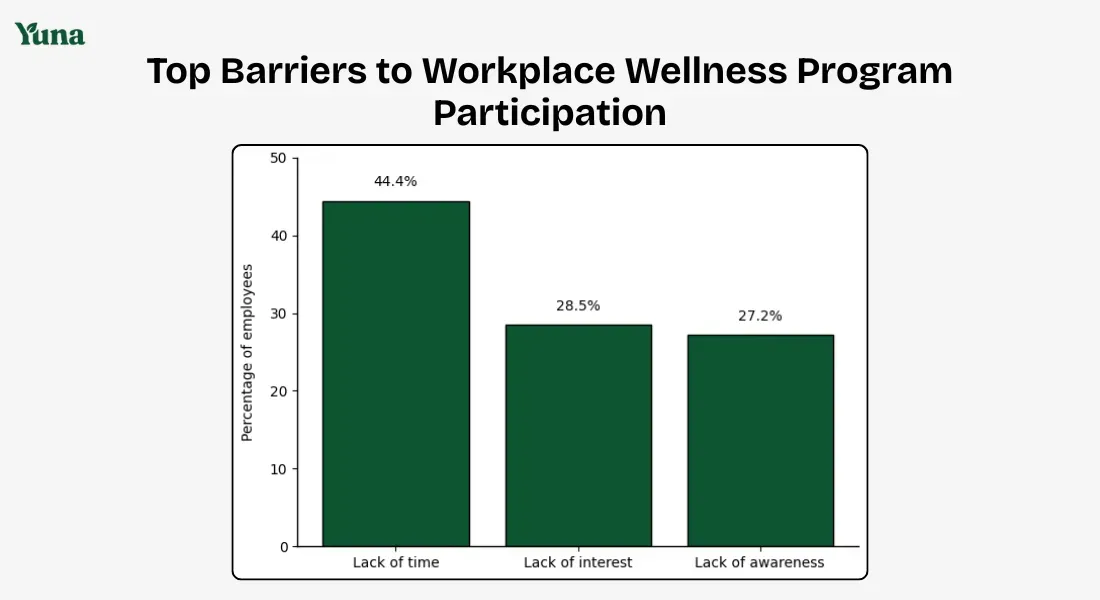
- Among employees who do not participate, 44.4% cite lack of time as the primary barrier, followed by 28.5% citing lack of interest and 27.2% citing lack of awareness.
Health and Well-Being Outcomes
Workplace wellness programs are most often evaluated by whether they produce measurable improvements in employee health. Research indicates that outcomes vary by program type, duration, and workforce context; however, sustained participation is consistently associated with positive physical and mental health changes, particularly in high-stress environments.
- Physical health outcomes in healthcare settings increased from 45% before program implementation to 70% after, representing a 25% point improvement.
- Mental health outcomes improved from 40% to 75% following wellness program implementation, a 35% point increase.
- Reported stress levels declined by 20% points, falling from 60% to 40% among employees after program participation.
- Burnout levels decreased by 20% points, dropping from 55% to 35% following wellness program implementation.
- 30% of employees participating in wellness programs report that managing stress became easier as an immediate lifestyle impact.
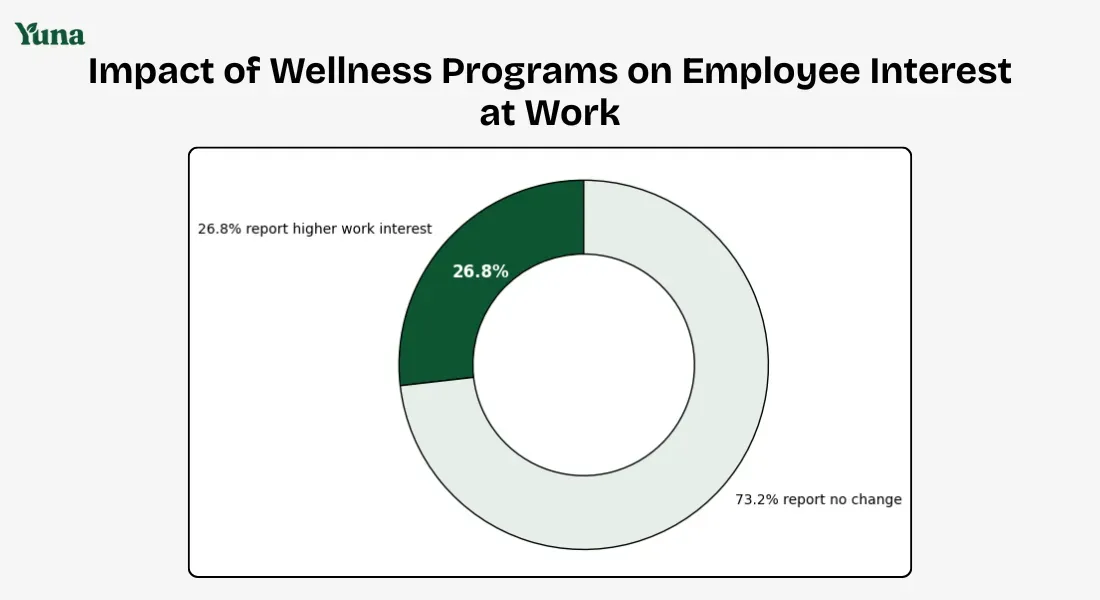
- 26.8% of participant employees report increased interest in their work as a direct result of wellness program participation.
- Employees reporting improved well-being also show higher levels of job satisfaction and perceived work engagement.
Impact on Productivity, Job Satisfaction, and Performance
Beyond health indicators, workplace wellness programs are closely linked to how employees perform at work. Data shows that improvements in physical and mental well-being often translate into higher job satisfaction, better focus, and improved service quality, especially in roles with high emotional or physical demands.
- Job satisfaction increased by 30% points, rising from 50% to 80% following wellness program implementation in healthcare settings.
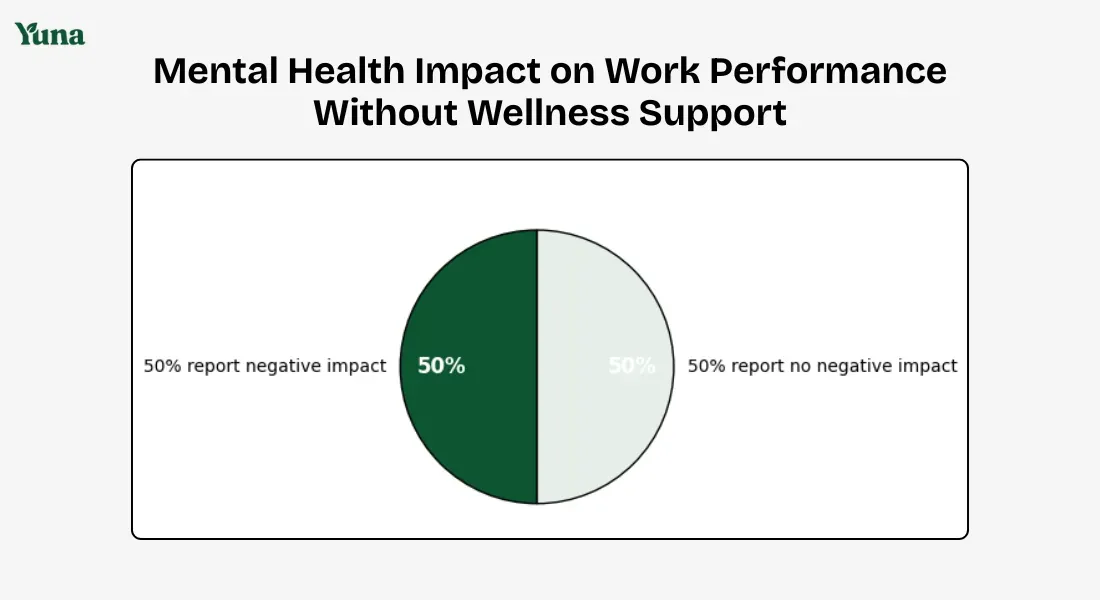
- 50% of employees report that their mental health negatively affects their performance at work when wellness support is absent or insufficient.
- Reductions in stress and burnout are associated with improved concentration, lower presenteeism, and more consistent day-to-day performance.
- Patient care quality improved by 30% points, increasing from 55% to 85%, demonstrating a direct link between employee well-being and service outcomes in healthcare environments.
- Employees who report improved well-being are more likely to feel engaged with their work and motivated to maintain performance standards.
Financial Impact, ROI, and Cost Savings
The financial case for workplace wellness is often misunderstood. Wellness programs are not designed to produce immediate cost savings, and short-term evaluations frequently underestimate their value.
Most financial outcomes linked to wellness initiatives emerge gradually, as sustained participation leads to healthier behaviors, reduced chronic risk, and fewer work-related health disruptions. For this reason, cost impact is best evaluated over multiple years rather than single budget cycles.
- Comprehensive workplace wellness programs focused on lifestyle behavior change generate a return on investment of 3 to 6 dollars for every dollar invested.
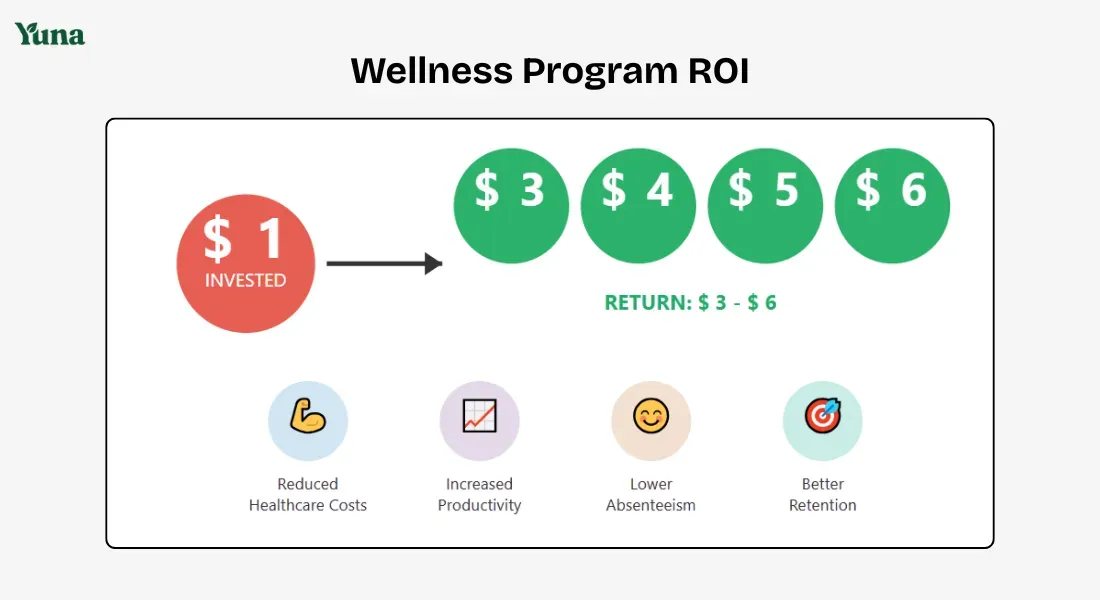
- Employers with sustained wellness initiatives report 25% reductions in absenteeism, healthcare costs, and disability or workers’ compensation costs.
- Financial returns typically materialize 2 to 5 years after the initial program investment, reflecting the time required for behavioral and health changes to translate into cost savings.
- Programs that lack long-term funding or leadership support show limited or inconsistent financial outcomes.
Incentives, Motivation, and Participation Drivers
Many workplace wellness programs struggle not because they are unavailable, but because employees lack a clear reason to participate. To address low engagement, employers often rely on financial and non-financial incentives to encourage enrollment and completion of wellness activities. Incentives are most commonly tied to assessments, screenings, and short-term actions, while more demanding or long-term interventions receive significantly less emphasis.
- 69% of employers with workplace wellness programs use financial incentives to encourage employee participation, making incentives a common engagement tool rather than a niche strategy.
- 31% of employers offer incentives specifically for completing Health Risk Assessments (HRAs), reflecting a focus on initial data collection rather than sustained behavior change.
- 20% of employers provide incentives for clinical screenings or screening-related activities, supporting early identification of health risks.
- 30% of employers offer incentives for participation in lifestyle management programs such as fitness, nutrition, or weight management initiatives.
- Only 4% of employers provide incentives for disease management programs, despite their potential impact on long-term health outcomes.
- Employers that use incentives report substantially higher participation, with 63% HRA completion compared to 29% among employers that do not offer incentives.
- Participation in clinical screenings reaches 57% when incentives are offered, compared to 38% without incentives, highlighting the direct effect of rewards on engagement.
- 84% of employers structure wellness incentives as rewards rather than penalties, avoiding punitive approaches.
- Gift cards and novelty items are used by nearly half of employers offering wellness incentives, reflecting preference for simple, low-friction rewards.
- The average incentive for smoking cessation ($682, or 12.6% of insurance cost) is more than three times higher than the average incentive paid for general wellness program participation ($203).
Measurement, Evaluation, and Program Effectiveness Gaps
Measuring the effectiveness of workplace wellness programs remains one of the most persistent challenges for employers. While organizations increasingly invest in employee well-being, many lack the tools, data, or internal capacity to track outcomes in a meaningful way. This disconnect makes it difficult to understand which initiatives deliver value, which need adjustment, and which fail to produce measurable impact.
- 72% of employers do not formally evaluate the outcomes of their workplace wellness programs, allowing initiatives to continue without clear performance evidence.
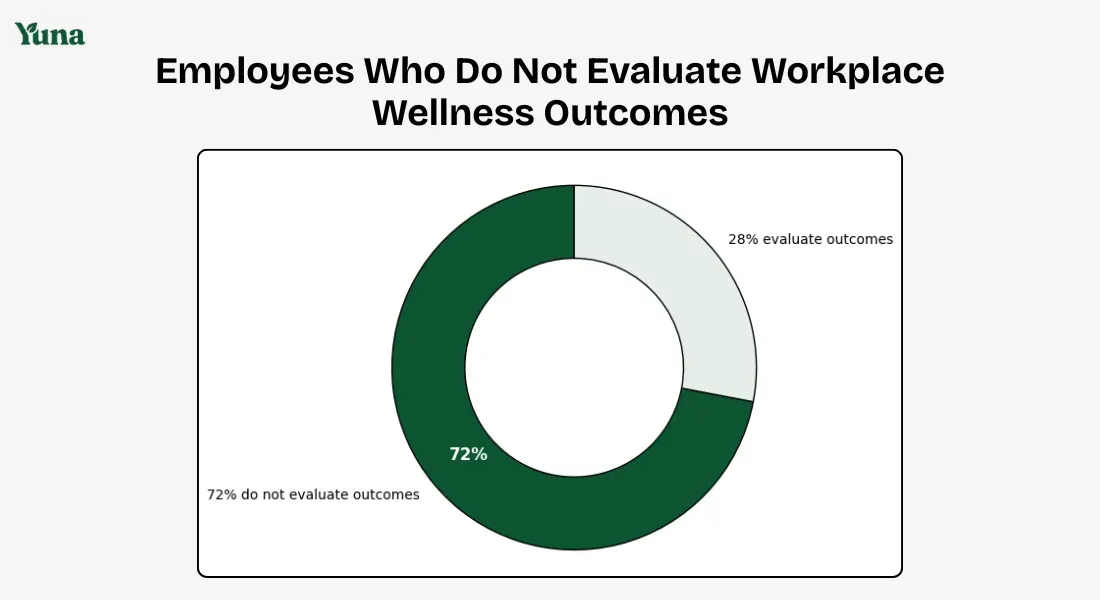
- Only 2% of employers report calculating actual savings estimates linked to wellness initiatives, despite expressing confidence in program benefits.
- 83% of organizations say that evaluating and monitoring employee health is important or very important to long-term program success.
- At the same time, 70% of employers report that evaluation and monitoring are difficult or very difficult to implement in practice.
- Lack of standardized wellness metrics makes it hard for employers to compare results across time periods, locations, or employee populations.
- Employers without structured evaluation frameworks are less likely to refine program design or identify ineffective wellness interventions.
Global Access, Regional Differences, and Coverage Gaps
Workplace wellness programs are not evenly distributed across the global workforce. Access is heavily shaped by geography, income level, and employer size, with most programs concentrated in large organizations and high-income regions. Global data shows that while workplace wellness is often discussed as a universal solution, actual coverage reaches only a small share of employed workers worldwide.
- The global workplace wellness market was valued at $48.5 billion in 2020, reflecting a 7% decline from 2019 due to pandemic-related disruptions and shifts in work models.
- Workplace wellness spending grew at an average annual rate of 4.6% between 2017 and 2019, before contracting in 2020.
- An estimated 324 million workers globally benefit from some form of workplace wellness program.
- This represents only 10.2% of the global employed workforce, showing that most workers worldwide have no access to formal workplace wellness initiatives.
- North America has the highest per-capita workplace wellness spending at $3,567, far exceeding other regions.
- Europe follows with per-capita spending of $1,236, while Asia-Pacific averages $359.74 per person.
- Access to workplace wellness programs is concentrated in high-income countries and large multinational organizations, with limited reach among small employers and low- and middle-income regions.
- Outside formal programs, 86% of employers report offering health promotion activities such as vaccinations or healthy food options.
- 61% of employers provide wellness-related benefits like Employee Assistance Programs (EAPs) or on-site clinics, even when structured wellness programs are absent.
Final Words
What’s next is turning these workplace wellness statistics into action. Use this data to review your current programs, spot gaps in participation, and reset expectations around timelines and ROI. Focus on fewer programs with clear goals, stronger incentives, and long-term measurement.
Revisit these benchmarks yearly to track progress, justify investment, and design wellness efforts that employees actually use.
FAQs
Why does access to workplace wellness programs look high, but participation stays low?
Although 79% of employees at organizations with 50 or more employees report having access to wellness programs, participation drops sharply because many programs rely on voluntary engagement. Time constraints, low perceived relevance, and lack of incentives mean that access alone does not translate into action, especially for programs requiring sustained effort.
What usually breaks down first in workplace wellness programs?
Employee engagement is typically the first failure point. While 46% of employees complete HRAs or screenings, participation in lifestyle and disease management programs often falls below 20%, with some employers reporting zero participation in more demanding interventions.
Are wellness programs mostly focused on prevention or on managing existing health risks?
Most programs emphasize prevention rather than treatment. 77% of employers offer lifestyle management initiatives such as fitness, nutrition, and smoking cessation, while only 56% offer disease management, and participation in those programs remains particularly low.
Do workplace wellness programs actually improve mental health, or is that overstated?
Data shows measurable mental health improvements when programs are implemented consistently. Mental health outcomes improved from 40% to 75% in healthcare settings, alongside 20% point reductions in stress and burnout, indicating that the impact is real rather than anecdotal.
How long does it realistically take for wellness programs to pay off financially?
Wellness programs are long-term investments. Employers typically see cost savings 2 to 5 years after initial implementation, with comprehensive programs delivering a 3 to 6 return on investment when participation and continuity are maintained.
Why do incentives work for screenings but not for deeper behavior change?
Incentives are most effective for low-effort actions. Employers offering incentives report 63% HRA completion, compared to 29% without incentives, but only 4% of employers incentivize disease management, limiting their impact on long-term health outcomes.
If employers believe in wellness, why don’t they measure results?
Despite 83% of employers saying evaluation is important, 72% do not formally assess outcomes. Limited resources, lack of standardized metrics, and difficulty linking wellness data to financial performance prevent consistent measurement.
Is workplace wellness really global, or mostly a high-income-country concept?
Workplace wellness remains highly uneven. Only 10.2% of the global workforce has access to formal programs, with most investment concentrated in North America and large multinational organizations, leaving the majority of workers without structured wellness support.
Data Sources
- https://globalwellnessinstitute.org/industry-research/
- https://www.ebri.org/publications/research-publications/issue-briefs/content/2023-workplace-wellness-survey
- https://www.rand.org/pubs/research_reports/RR254.html
- https://www.weforum.org/reports/making-the-right-investment-employee-health-and-the-power-of-metrics
- https://pmc.ncbi.nlm.nih.gov/articles/PMC4945172/
- https://www.dol.gov/sites/dolgov/files/ebsa/researchers/analysis/health-and-welfare/workplace-wellness-programs-study-full-text.pdf
- https://www.ebri.org/content/full/financial-incentives-and-workplace-wellness-program-participation-5502
- https://www.globalwellnesssummit.com/press/press-releases/research-report-the-global-wellness-economy-looking-beyond-covid/
- https://scindeks.ceon.rs/article.aspx?artid=2334-827X2102091L
- https://www.sentinel-group.org/wp-content/uploads/2013/06/Wellness-for-a-Global-Workforce.pdf
- https://healthleadershipjournal.com/evaluation-and-analysis-of-workplace-wellness-programs-in-healthcare-settings/