
Employee burnout refers to long-term workplace stress that leads to emotional exhaustion, disengagement, and lower productivity. In recent years, rising workloads, economic pressure, and changing work environments have increased burnout across many industries.
In this statistical guide, we analyze verified data from global workplace reports and research studies to highlight trends in employee engagement, well-being, stress levels, and burnout.
All statistics come from credible sources, and the reference links are included at the end of the article for transparency and verification.
Key Takeaways
- Global employee engagement fell to 21%, meaning only about one in five employees feels actively engaged at work.
- Low engagement costs the global economy an estimated $438 billion in lost productivity.
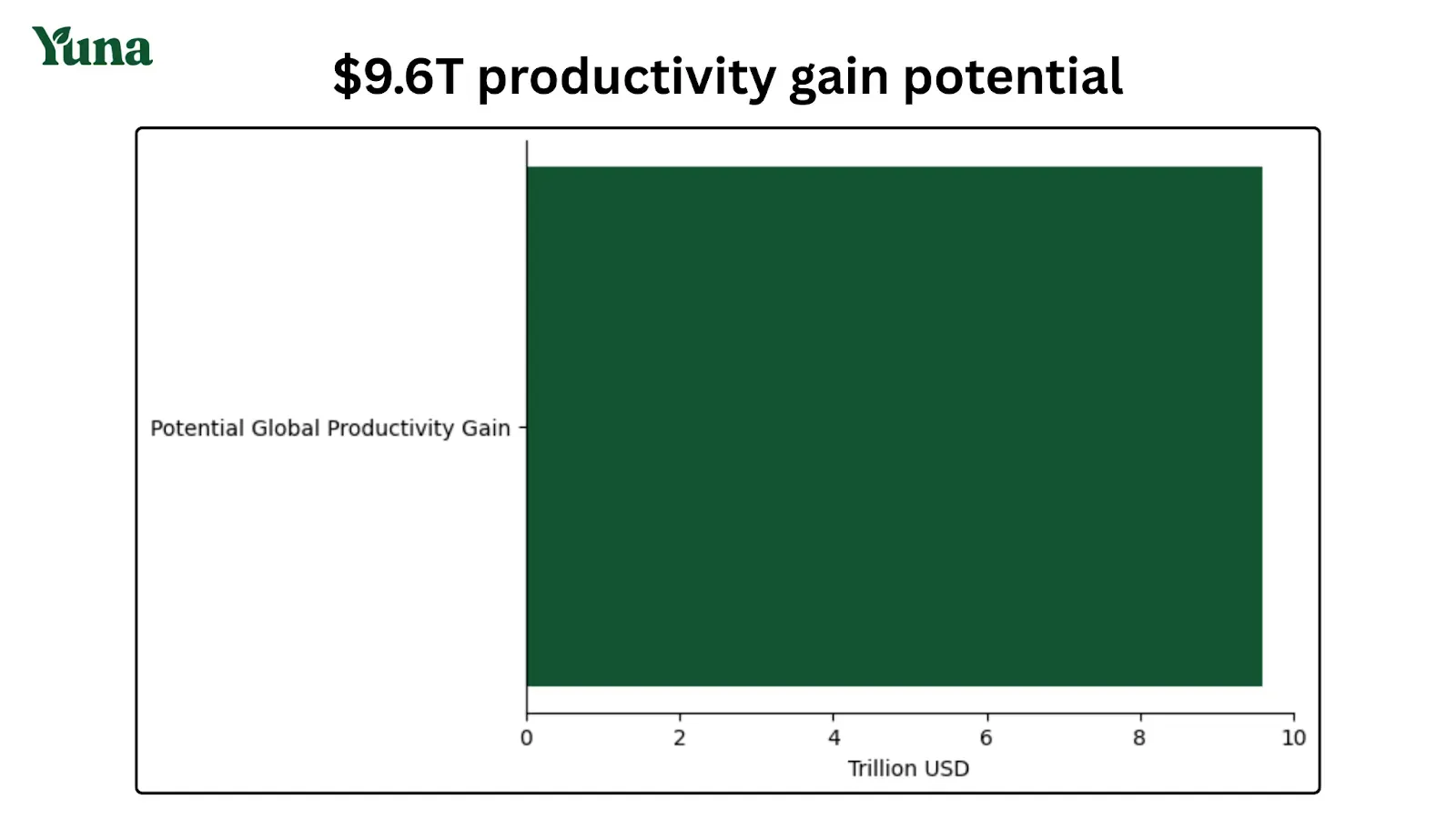
- If the global workforce were fully engaged, the economy could gain up to $9.6 trillion in productivity.
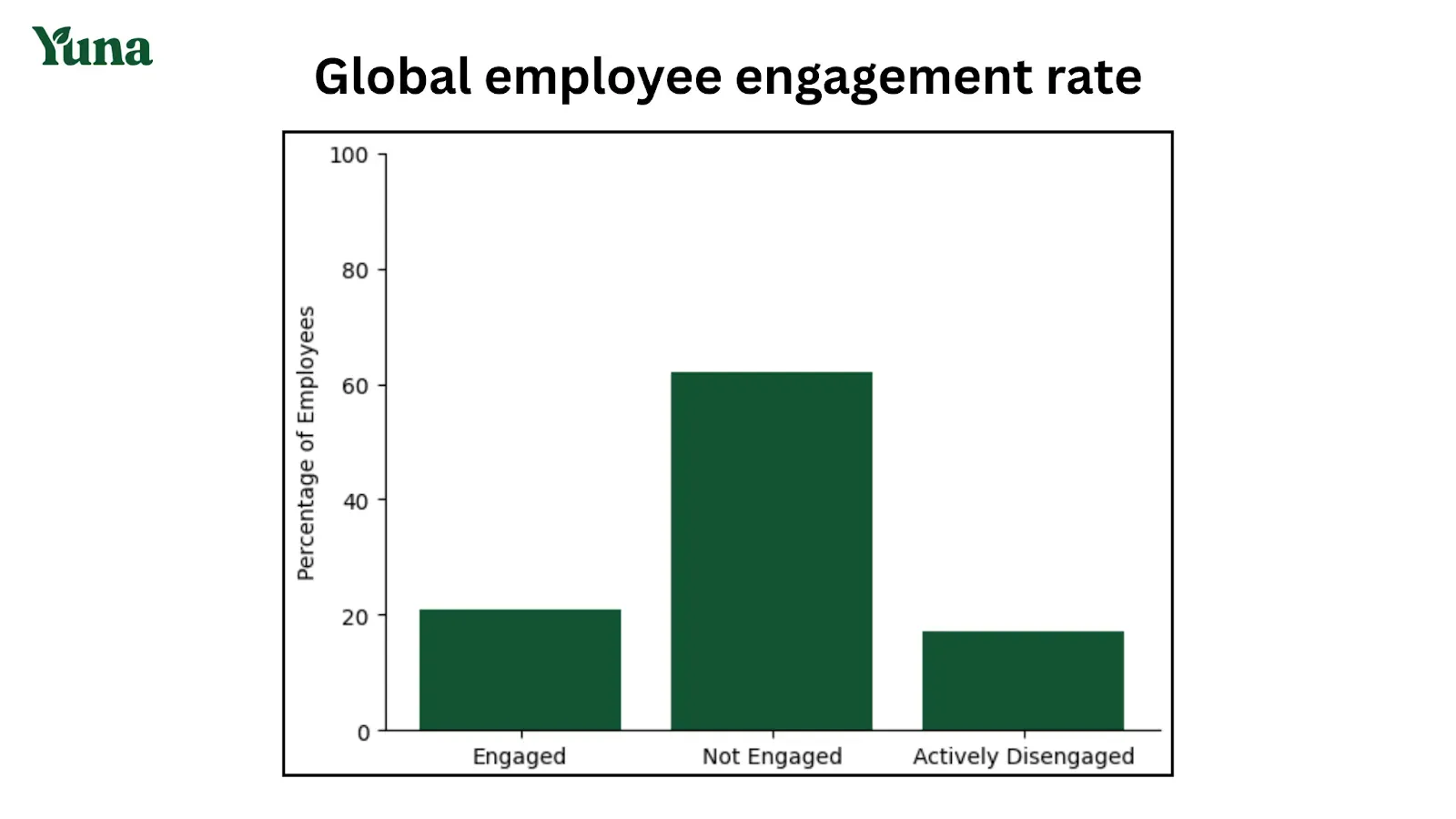
- 62% of employees are not engaged, and 17% are actively disengaged, showing that most workers feel disconnected from their jobs.
- Manager engagement declined from 30% to 27% in 2024, indicating rising disengagement even among leaders.
- 40% of employees worldwide reported experiencing a lot of stress during the previous day, highlighting widespread workplace pressure.
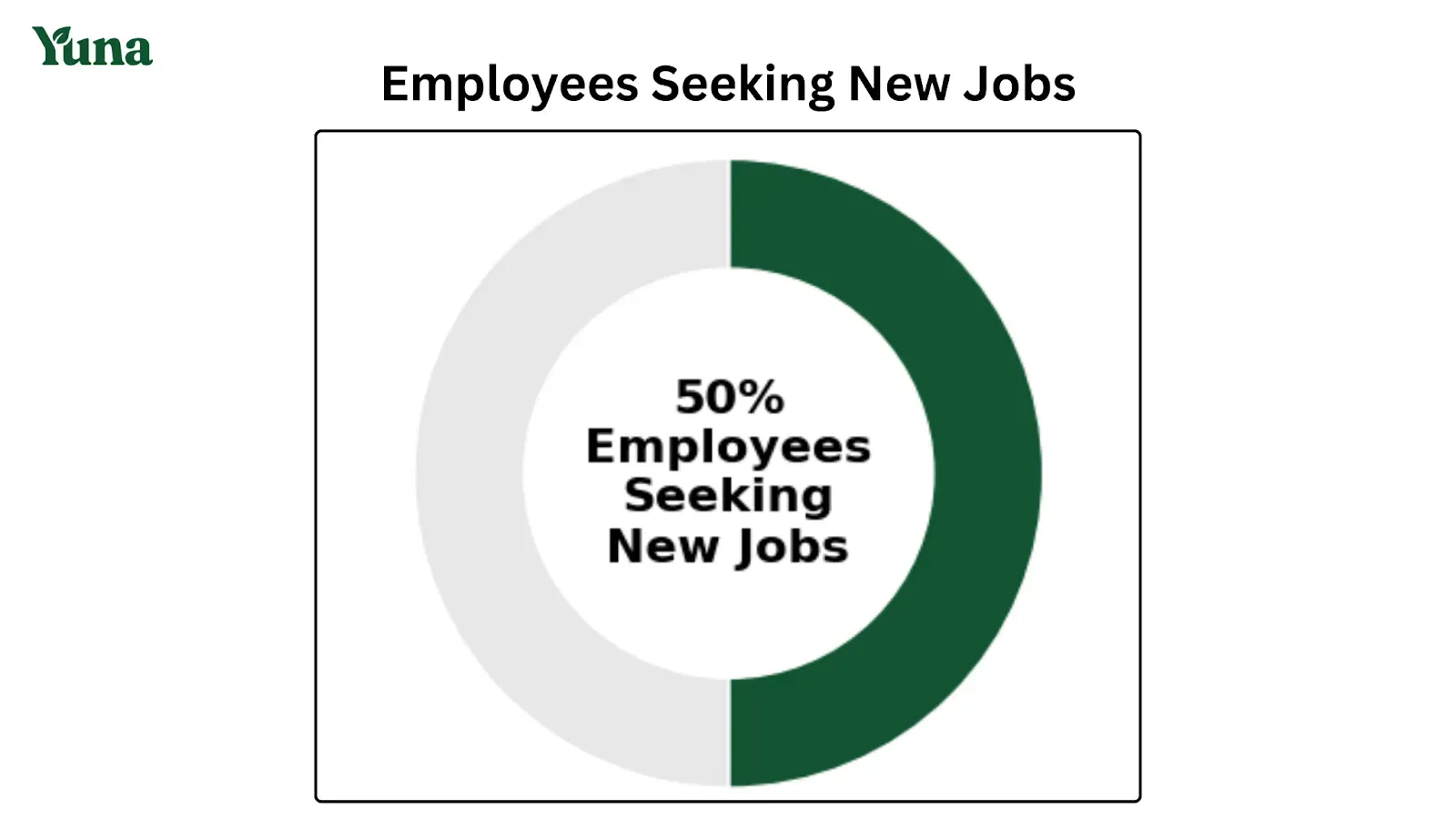
- 50% of employees say they are watching for or actively seeking a new job, signaling high workforce mobility.
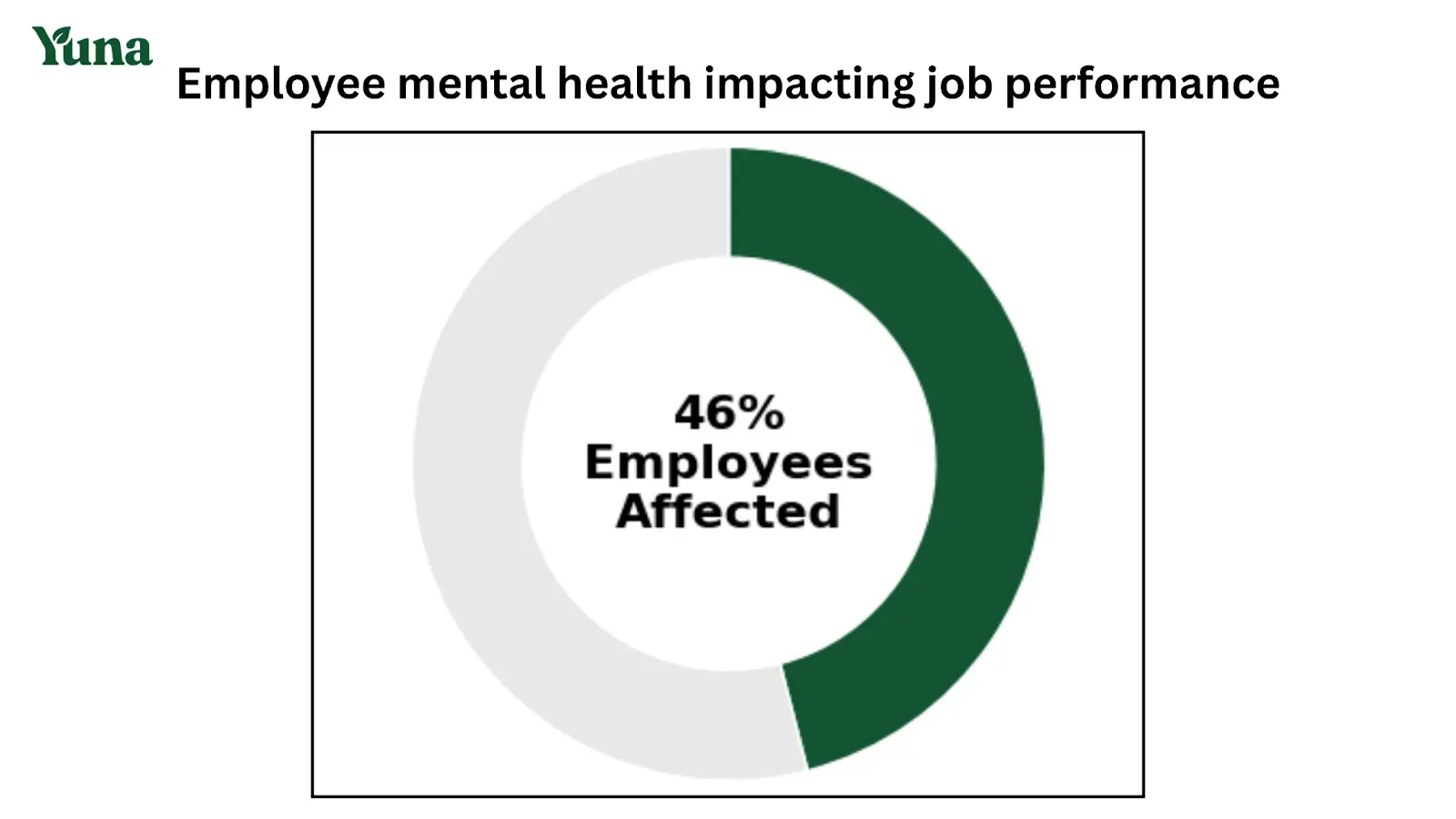
- 46% of employees say their mental health has negatively affected their job performance.
- 43% of employers reported an increase in employee burnout in the past year.
- Workers experiencing burnout are nearly three times more likely to actively search for another job (45% vs 16%).
Global Employee Engagement Statistics
Employee engagement reflects how connected people feel to their work and organization. The statistics in this section highlight global engagement levels, disengagement rates, leadership engagement trends, and the economic impact of low engagement. Together, these figures provide a clear picture of how employee motivation influences productivity and workplace performance worldwide.
- Global employee engagement dropped to 21% last year, meaning only about one in five employees feels actively involved and motivated at work. This decline is estimated to have cost the global economy $438 billion in lost productivity.
- According to the State of the Global Workplace 2025 report, 21% of employees are engaged, 62% are not engaged, and 17% are actively disengaged, showing that most workers feel disconnected from their jobs.
- Manager engagement declined from 30% to 27% in 2024, indicating that leaders themselves are becoming less engaged with their work and teams.
- Engagement dropped most among leadership groups, with young managers under 35 seeing a 5 percentage-point decline and female managers experiencing a 7-point drop.
- Researchers estimate that if employees worldwide were fully engaged in their work, the global economy could gain up to $9.6 trillion in productivity.
Employee Engagement by Demographics
Engagement does not look the same across all employee groups. The data presented here compares engagement levels by gender, age, job level, and work location. These insights help reveal which segments of the workforce feel more connected to their roles and where organizations may need to improve engagement strategies.
- 22% of female employees and 21% of male employees are engaged globally, showing very small differences in engagement levels between men and women.
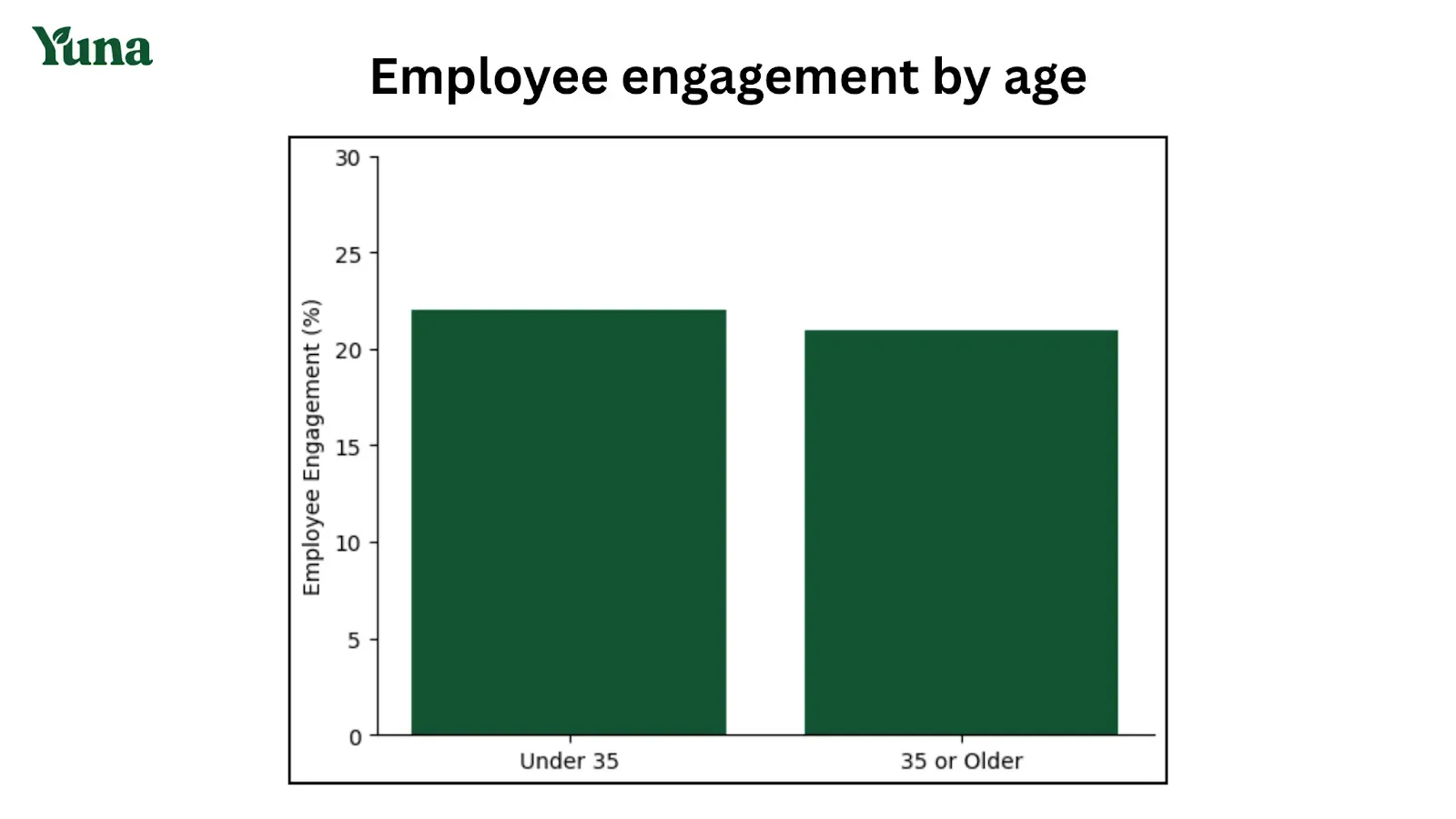
- 22% of employees younger than 35 and 21% of employees aged 35 or older are engaged, suggesting that engagement levels remain similar across age groups.
- By job level, 27% of managers and 18% of individual contributors are engaged, indicating that people in leadership roles are more likely to feel connected to their work.
- By work location, engagement is highest among fully remote employees at 31%, while hybrid workers and on-site, remote-capable employees both report 23% engagement, and employees who must work fully on-site report the lowest engagement at 19%.
Regional Employee Engagement Statistics
Workplace engagement varies widely depending on geography and regional work culture. This section presents engagement data across major global regions, including North America, Europe, Asia, and other markets. The statistics help illustrate how economic conditions, workplace expectations, and leadership styles influence engagement in different parts of the world.
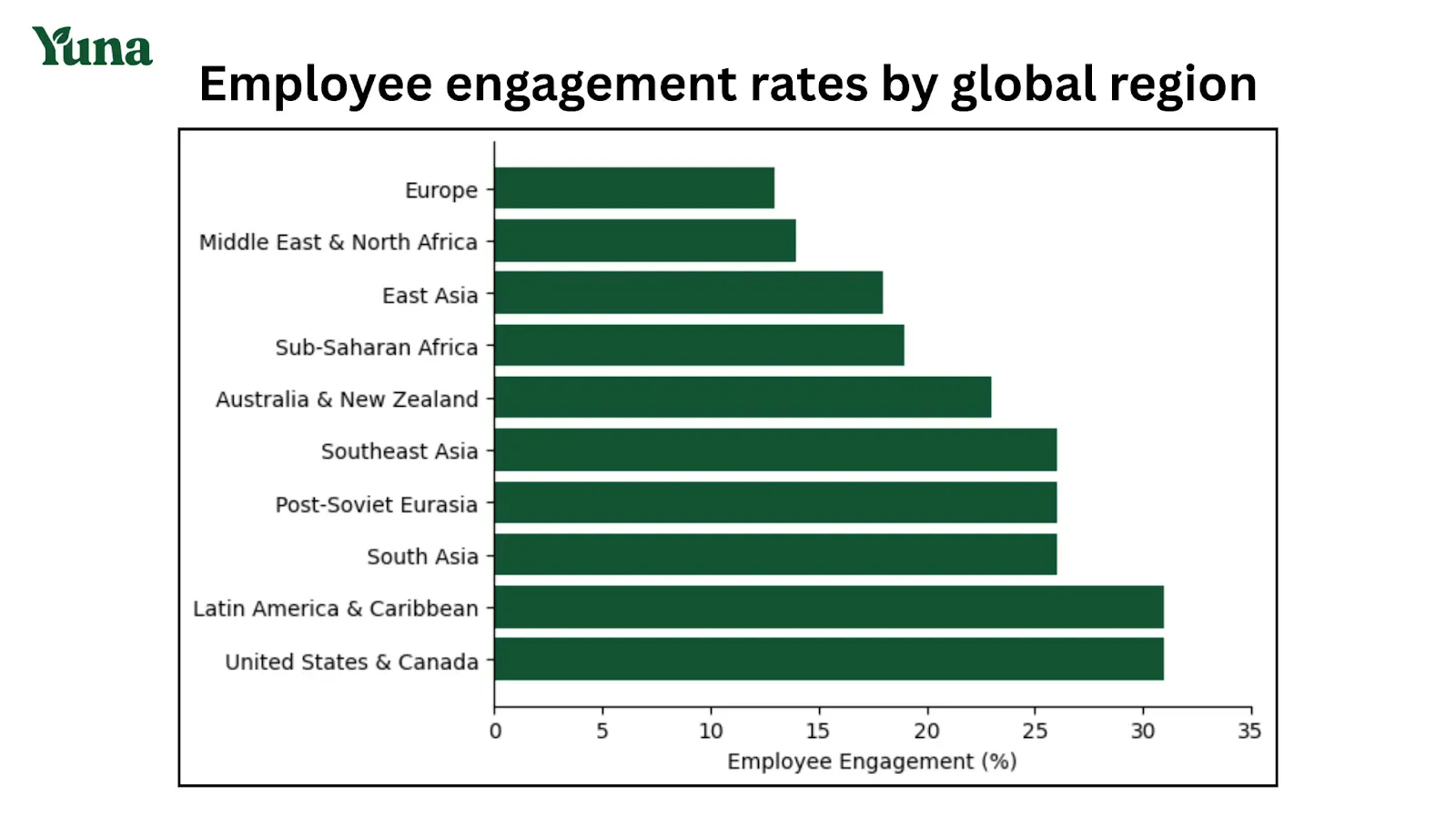
- 31% of employees in the United States and Canada report being engaged at work, placing the region among the highest globally for employee engagement.
- 31% of employees in Latin America and the Caribbean are engaged, matching the highest regional engagement levels.
- 26% of employees in South Asia report being engaged, reflecting moderate engagement levels across the region.
- 26% of employees in Post-Soviet Eurasia are engaged, showing similar engagement patterns to those in South Asia.
- 26% of employees in Southeast Asia report engagement, indicating a stable but moderate engagement rate.
- 23% of employees in Australia and New Zealand are engaged, slightly below the top-performing regions.
- 19% of employees in Sub-Saharan Africa are engaged, indicating lower workplace engagement than in other regions.
- 18% of employees in East Asia report being engaged, suggesting a higher share of disengaged workers.
- 14% of employees in the Middle East and North Africa are engaged, one of the lowest engagement rates globally.
- 13% of employees in Europe report being engaged, making it the lowest regional engagement level in the report.
Employee Wellbeing Statistics
Employee well-being extends beyond work performance and includes overall life satisfaction and mental health. The data in this section explores how many employees feel they are thriving, struggling, or suffering. These insights highlight the broader relationship between workplace conditions, well-being, and employee engagement.
- 33% of employees worldwide report that they are thriving in their lives, while 58% say they are struggling, and 9% say they are suffering, showing that many workers face challenges related to life satisfaction and wellbeing.
- Global employee well-being has been declining since its peak of 35% in 2022, suggesting increasing pressure on workers over recent years.
Life Evaluation Breakdown
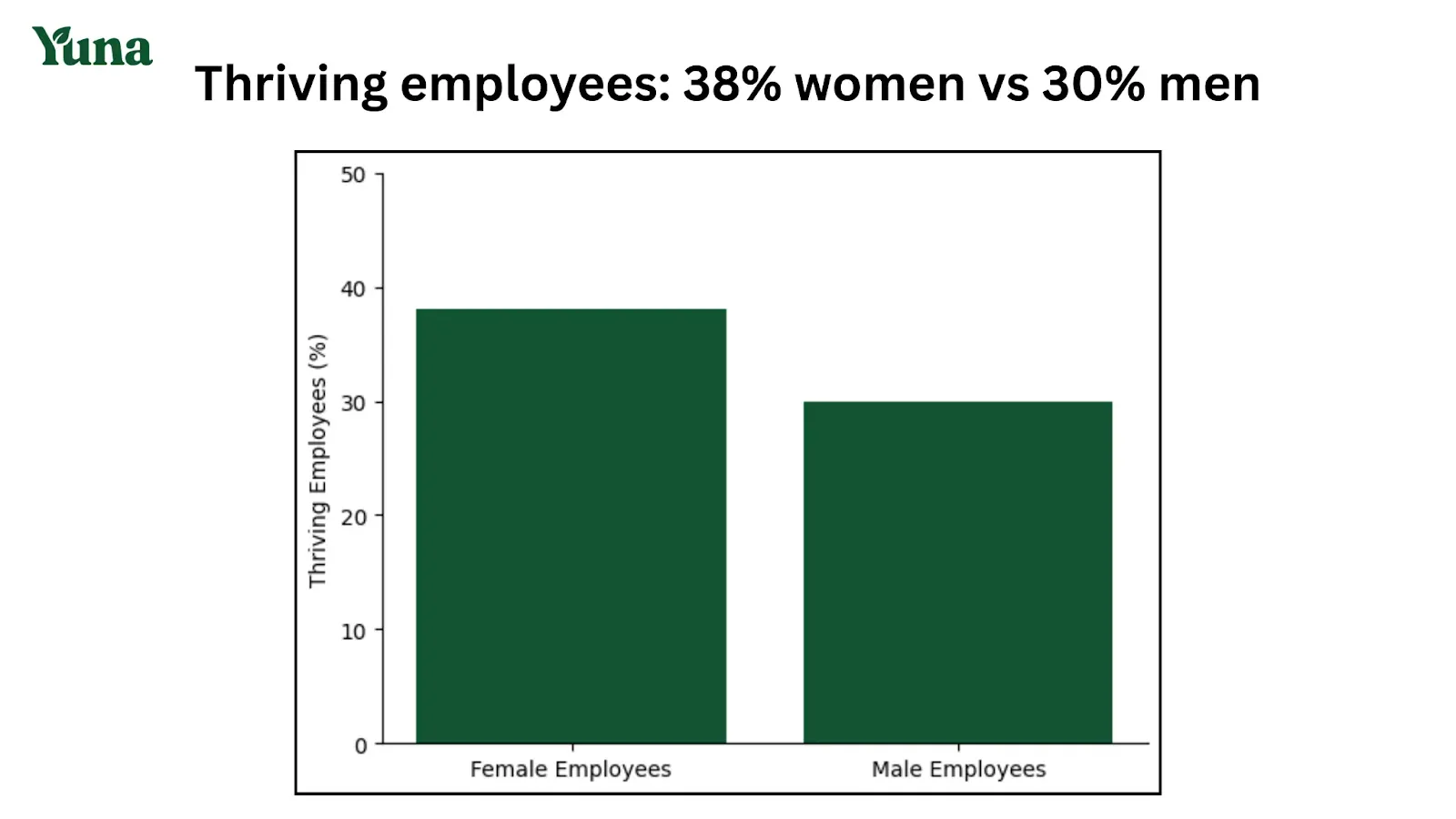
- 38% of female employees and 30% of male employees say they are thriving, indicating that women report slightly higher workplace life satisfaction.
- 32% of employees under 35 and 34% of employees aged 35 or older say they are thriving, showing only minor differences between younger and older workers.
- By job level, 37% of managers report thriving, compared with 31% of individual contributors, suggesting that leadership roles may provide greater control or satisfaction.
Workplace Stress and Emotional Health Statistics
Workplace stress remains one of the most common challenges affecting employees today. The statistics in this section examine how frequently employees experience stress and how these levels differ across demographic groups and job roles. Understanding these trends helps organizations recognize the scale of stress in modern work environments.
- 40% of employees globally said they experienced stress a lot of the previous day, highlighting the widespread presence of workplace stress.
Stress Breakdown
- Both female and male employees report the same stress level at 40%, indicating stress affects workers equally across genders.
- 41% of employees younger than 35 and 39% of employees aged 35 or older experienced stress, suggesting slightly higher stress levels among younger workers.
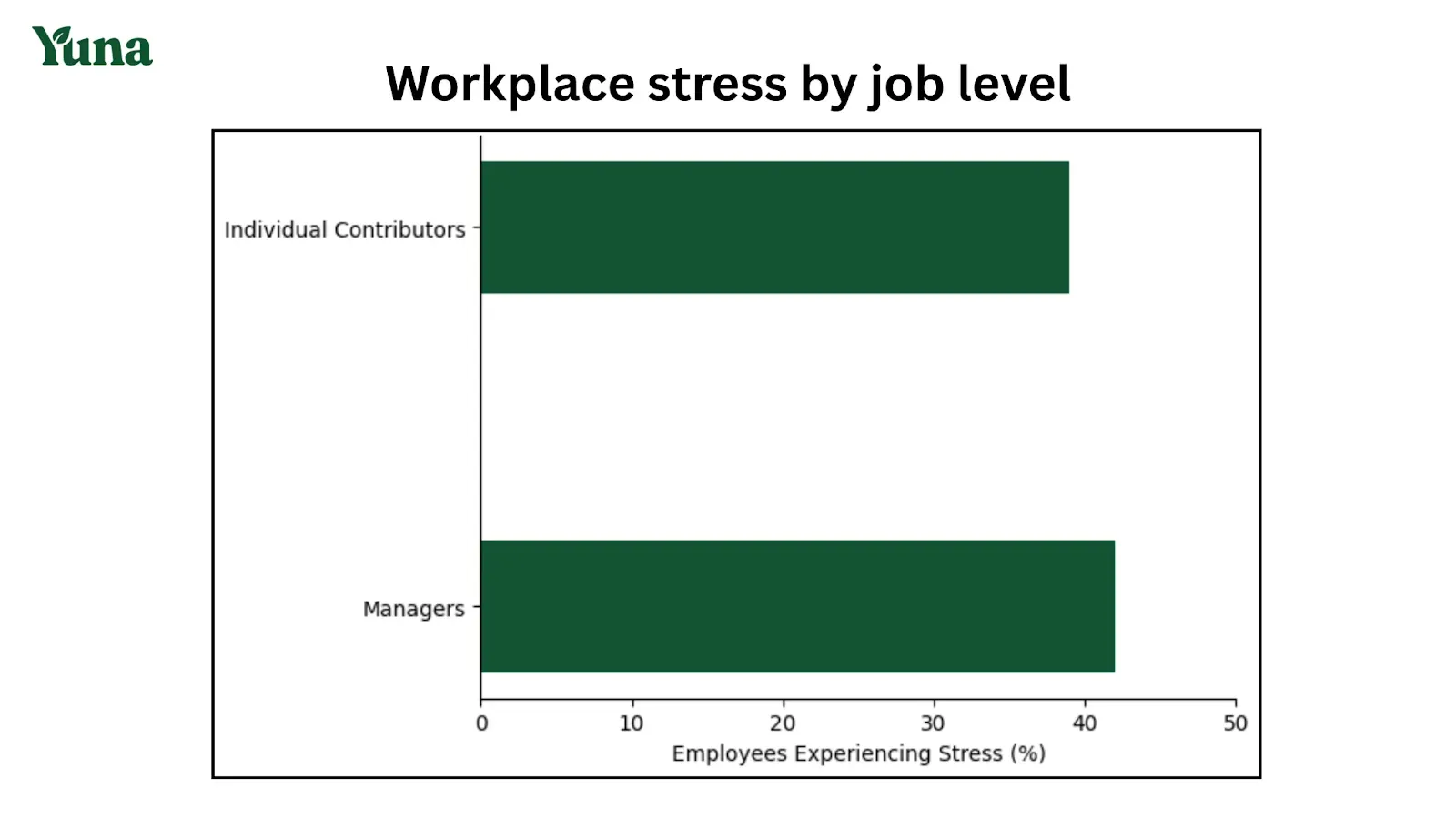
- 42% of managers and 39% of individual contributors experienced stress, showing that leadership roles often involve higher stress levels.
Workplace Anger and Negative Emotions
Emotional experiences during the workday can significantly affect engagement and productivity. The figures presented here explore how often employees report feelings such as anger, sadness, and frustration. These insights reveal the emotional pressures many workers face in their daily professional lives.
- 21% of employees globally reported experiencing anger a lot during the previous day, reflecting emotional strain among workers.
- 20% of female and 21% of male employees experienced anger, indicating similar emotional responses across genders.
- Remote workers reported the highest anger levels at 25%, compared with 17% among hybrid workers and 21% among employees working on site.
Other Emotional Indicators
- 23% of employees said they experienced sadness a lot of the previous day, showing that emotional challenges remain common in the workforce.
- 22% of employees reported feeling lonely during the previous day, which can affect both mental health and workplace engagement.
Job Market Sentiment and Turnover Statistics
Employee attitudes toward job opportunities offer important clues about workforce stability. The data in this section highlights how confident workers feel about the job market and how many are actively searching for new opportunities. These trends help explain rising job mobility and shifting career expectations.
- 51% of employees globally believe it is a good time to find a job in their area, indicating strong confidence in the job market.
- 50% of employees say they are watching for or actively seeking a new job, which suggests high levels of workforce mobility.
Intent to Leave Breakdown
- 47% of female employees and 51% of male employees say they are looking for new job opportunities.
- 58% of employees under 35 say they are actively looking for a new job compared with 43% of employees aged 35 or older, showing younger workers are more likely to switch jobs.
- 51% of managers and 49% of individual contributors report searching for new opportunities, showing similar turnover intentions across roles.
Workplace Loneliness Statistics
Social connection plays a major role in employee satisfaction and engagement. The statistics included here examine how frequently employees report feeling lonely at work and how this varies across job roles. These insights help illustrate the growing concern around workplace isolation.
- 22% of employees globally reported experiencing loneliness a lot during the previous day, highlighting social disconnection as a growing workplace concern.
- By job level, 23% of managers and 22% of individual contributors reported feeling lonely, showing that loneliness affects employees across different roles.
Workplace Burnout and Mental Health Statistics
Burnout has become a major concern for organizations and employees alike. The data presented here highlights how mental health challenges affect job performance, productivity, and employee well-being. These figures provide a deeper understanding of how burnout impacts the modern workforce.
- 46% of employees say their mental health has negatively affected their job performance, showing the strong connection between mental health and productivity.
- 43% of employers reported an increase in employee burnout over the past year, reflecting growing workplace pressure.
- 34% of employers said employee performance or productivity decreased in 2022, partly due to burnout and stress.
- 46% of companies reported higher employee turnover in 2023 compared with 35% in 2022, indicating rising workforce instability.
Additional research also shows:
- 44% of U.S. employees report feeling burned out at work.
- 45% say they feel emotionally drained because of work.
- 51% say they feel used up at the end of the workday.
- Studies using the Maslach Burnout Inventory show that 10% to 15% of employees frequently experience all three major burnout symptoms, including emotional exhaustion, cynicism, and reduced professional effectiveness.
Causes of Workplace Stress and Burnout
Several workplace and economic factors contribute to rising burnout levels. The statistics in this section examine key drivers, including career pressure, job security concerns, and financial stress. These insights help explain the underlying forces that increase stress across the workforce.
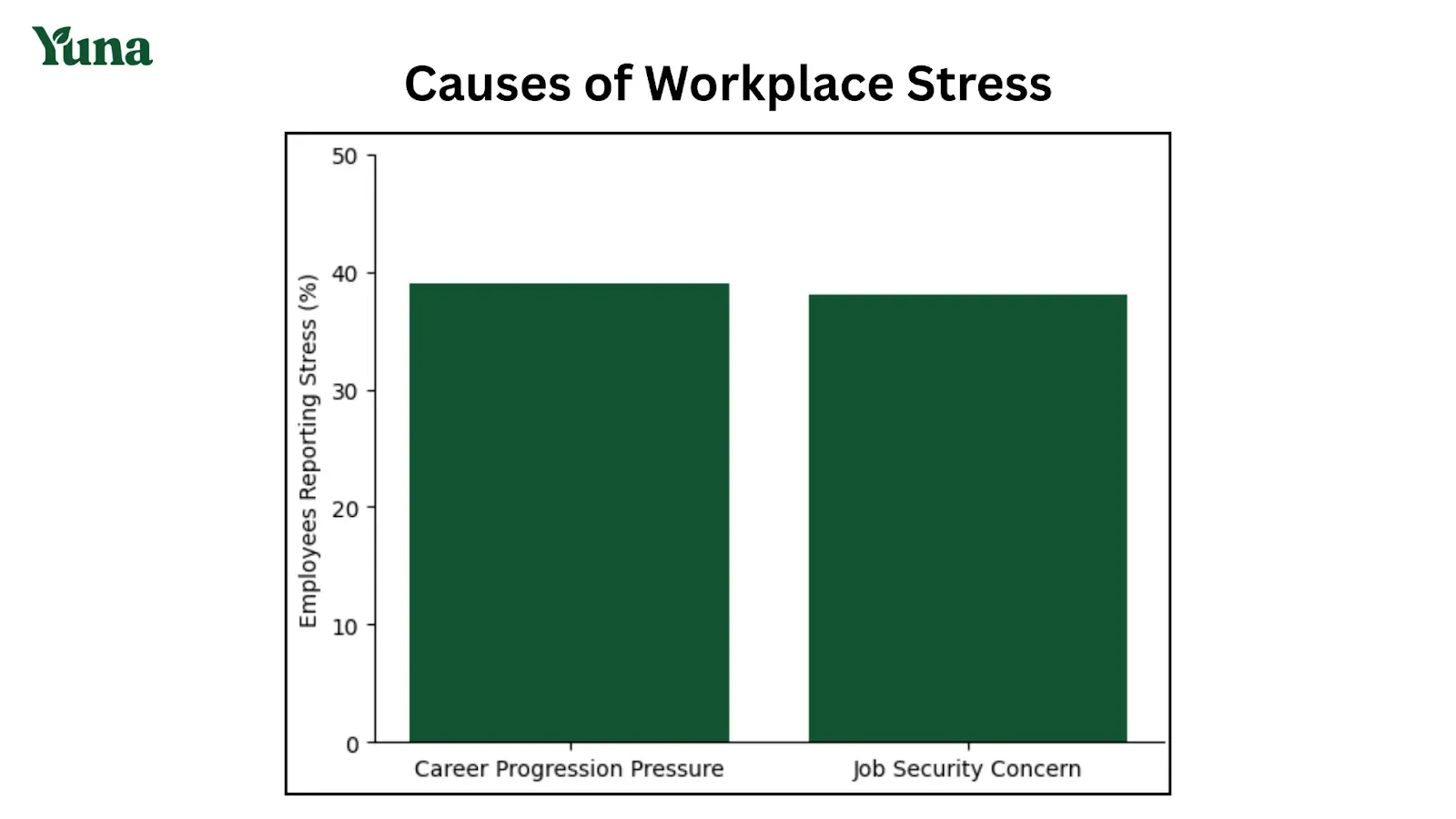
- 39% of employees say pressure around career progression causes stress, while 38% say job security is a major concern.
- 68% of global workers say rising living costs or inflation caused stress, especially during the first half of 2023.
- Other common stress drivers include political issues (43%), global events (42%), and personal finances (37%).
Workplace Productivity and Digital Fatigue Statistics
Modern work environments rely heavily on digital tools and constant communication. The statistics in this section examine how technology use, app switching, and increased meeting time affect productivity. These trends reveal how digital overload contributes to fatigue and reduced focus.
- Employees lose 32 days each year switching between workplace apps, increasing frustration and reducing productivity.
- Workers switch screens an average of 566 times per day, which contributes to distraction and mental fatigue.
- Employees spend 250% more time in meetings today than before the pandemic, increasing workload pressure and reducing focus time.
Workplace Wellbeing Programs and Support
Many organizations invest in wellbeing initiatives to support employee health and productivity. The data presented here looks at company spending on wellbeing programs and how employees access these resources. These insights reveal how organizations address workforce health challenges.
- Companies with more than 20,000 employees spend an average of $11 million per year on workforce health and well-being programs.
- However, 68% of workers say they do not fully use these programs because they are difficult or time-consuming to access.
- 23% of employees say the lack of career growth opportunities negatively affects their well-being.
Burnout Impact on Engagement and Retention
Burnout not only affects individual well-being but also influences workplace outcomes. The statistics included here examine how burnout affects employee engagement, job performance, and the likelihood of employees leaving their organization.
- Employees who feel a strong sense of belonging at work are 2.5 times less likely to experience burnout.
- Workers experiencing burnout are nearly three times more likely to actively search for another job (45% compared with 16%).
- Burned-out employees are less likely to go beyond their job expectations (40% compared with 56%).
- In toxic workplaces, employees are 60% more likely to plan to leave their organization.
Industry Specific Burnout Statistics
Burnout rates often vary across professions depending on workload and job demands. The statistics in this section highlight burnout patterns among professionals in industries such as law, education, and healthcare. These insights help demonstrate how occupational pressures influence employee wellbeing.
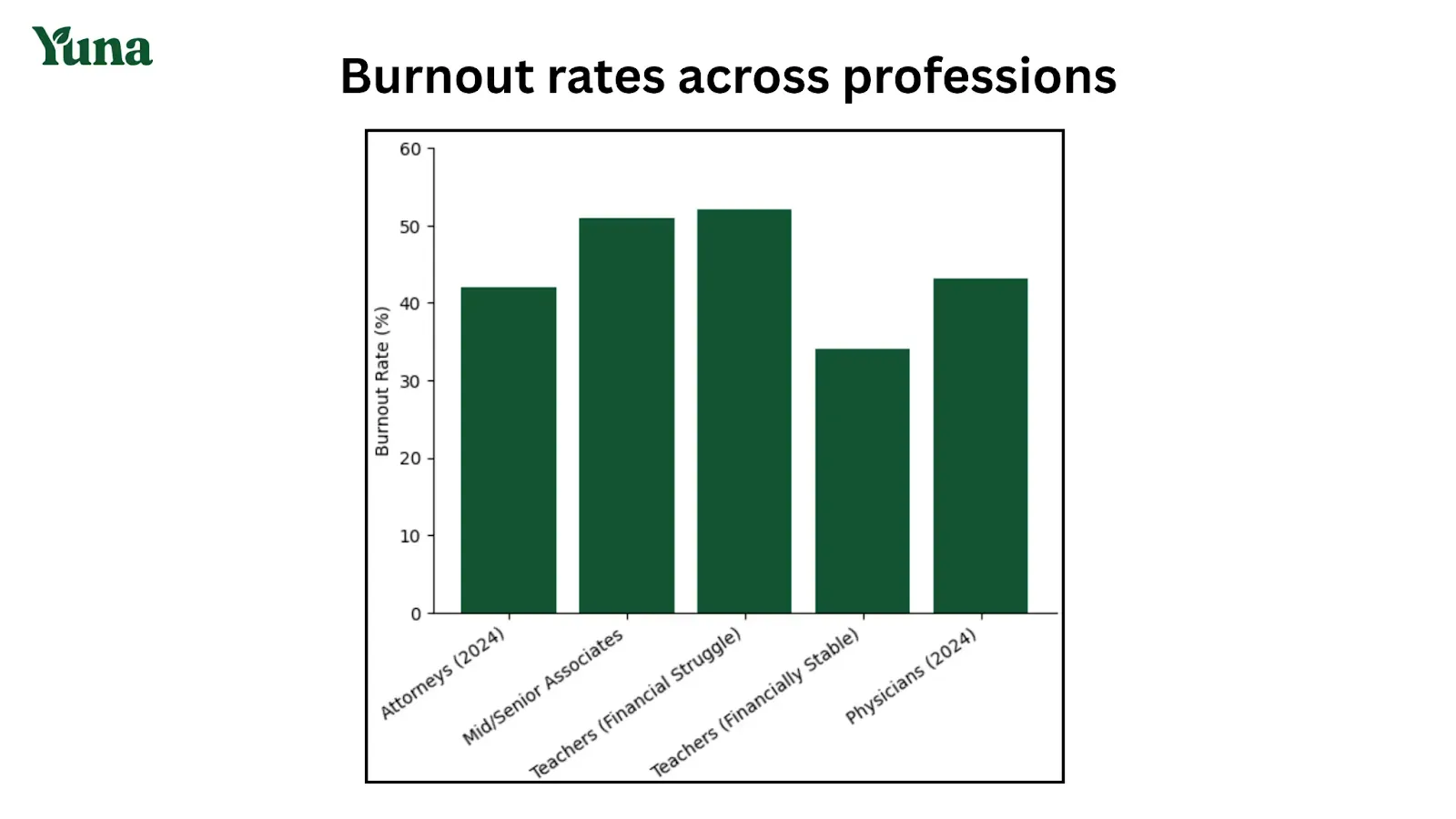
- Attorneys reported feeling burned out 42% of the time in 2024, with mid and senior-level associates reporting burnout rates as high as 51%.
- 52% of teachers who struggle financially report frequent burnout, compared with 34% of teachers who feel financially stable.
- 43.2% of physicians reported at least one burnout symptom in 2024, down from 48.2% in 2023 and 53% in 2022, indicating a slight improvement.
Workplace Culture and Inclusion Statistics
Organizational culture plays a critical role in shaping employee experience. The statistics presented here examine employee attitudes toward fairness, inclusion, and mental health support at work. These insights highlight how supportive workplace environments can influence engagement and well-being.
- 78% of workers support fairness and inclusion initiatives in the workplace, recognizing their impact on engagement and wellbeing.
- Employees who work at organizations that support mental health are twice as likely to report no burnout or depression.
- However, 46% of employees worry they might lose their jobs if they openly discuss mental health challenges at work.
Final words
Employee burnout trends reflect bigger changes in how modern workplaces operate. Rising workloads, economic pressure, digital fatigue, and shifting work environments continue to influence employee engagement and well-being across industries.
While burnout levels remain a concern, the data also highlights opportunities for organizations to improve workplace culture, support mental health, and strengthen employee engagement.
Leaders can use these insights to design healthier work environments, reduce stress drivers, and build sustainable productivity. As work continues to evolve, understanding burnout trends through reliable data helps organizations make informed decisions that support both employee well-being and long-term business performance.
FAQs
What percentage of employees are engaged at work globally?
About 21% of employees worldwide are engaged at work. According to the State of the Global Workplace 2025 report, 62% of employees are not engaged, and 17% are actively disengaged, indicating that most workers feel disconnected from their roles and organizations.
How much productivity is lost due to low employee engagement?
Low employee engagement costs the global economy about $438 billion in lost productivity each year. Research also suggests that if employees worldwide were fully engaged, global productivity could increase by as much as $9.6 trillion.
How many employees experience workplace stress?
Around 40% of employees globally reported experiencing stress a lot during the previous day. This indicates that workplace pressure remains a common issue across industries and job roles.
How many employees are looking for a new job?
About 50% of employees say they are watching for or actively seeking a new job. Job mobility is even higher among younger workers, with 58% of employees under 35 looking for new opportunities.
How does burnout affect employee performance?
Burnout significantly reduces employee performance and engagement. Nearly 46% of employees say their mental health has negatively affected their job performance, and burned-out workers are almost three times more likely to search for another job.
What are the main causes of employee burnout?
Career pressure, job security concerns, and financial stress are among the main causes of employee burnout. Around 39% of employees report stress related to career progression, 38% cite job security concerns, and 68% say rising living costs contribute to stress.
Data Sources
- https://www.gallup.com/workplace/349484/state-of-the-global-workplace-2022-report.aspx
- https://www.workforce.com/news/statistics-on-employee-burnout
- https://www.deloitte.com/us/en/insights/topics/talent/employee-wellbeing.html
- https://ijpsat.org/index.php/ijpsat/article/download/7042/4503#:~:text=Results%20The%20study%20found%20that,a%20high%20degree%20of%20burnout.
- https://retirement.fidelityinternational.com/media/global-wi/pdfs/employee-burnout-problem-report.pdf
- https://www.shrm.org/in/topics-tools/news/inclusion-diversity/burnout-shrm-research-2024
- https://www.workplaceoptions.com/uk/wp-content/uploads/sites/21/2023/06/WPO_White-Paper_Tackling-Burnout_A4_Global-English.pdf
- https://pro.bloomberglaw.com/insights/company-news/bloomberg-law-releases-attorney-workload-survey-insights-and-webinar-on-work-life-balance-solutions/
- https://news.gallup.com/poll/702599/one-five-teachers-struggle-financially.aspx
- https://www.ama-assn.org/practice-management/physician-health/us-physician-burnout-hits-lowest-rate-covid-19
- https://www.mindsharepartners.org/2025-mental-health-at-work-report